
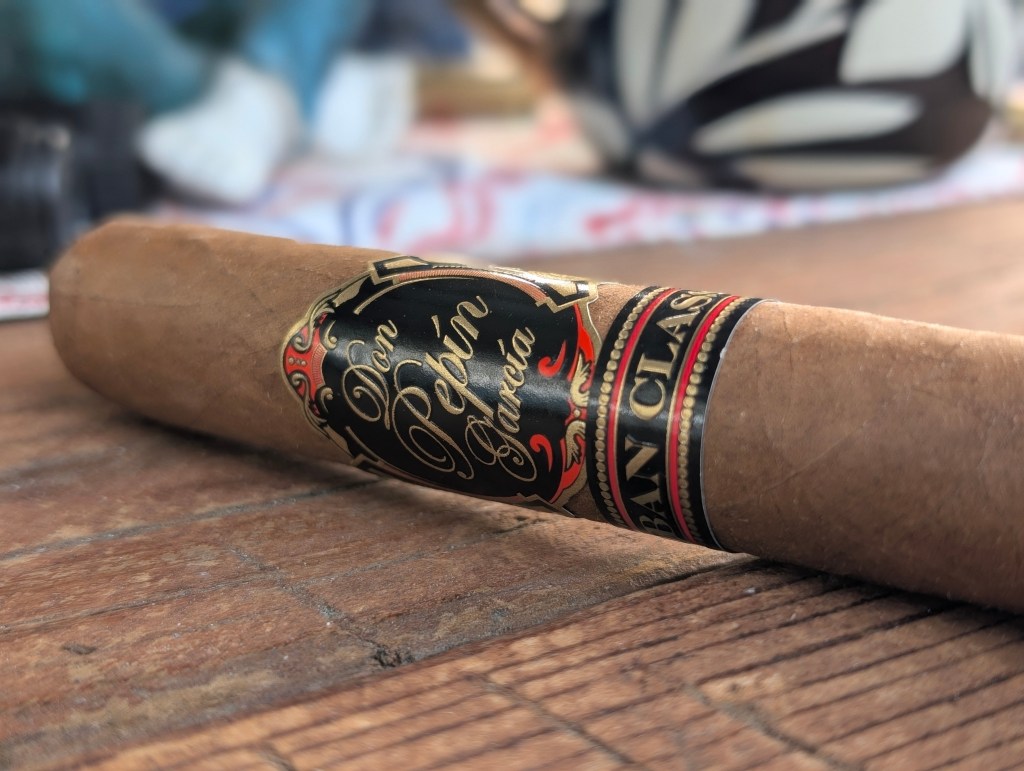
Wrapper: Habano Rosado / Nicaragua
Binder: Nicaragua
Filler: Nicaragua
Size: Toro (6 x 52)
Strength: Medium → Medium-Plus (nearly full in the final inch)
Body: Medium → Full (a couple of inches in)
Price: $7.52–$8.30 each; $150.47–$165.99/box of 20 (U.S./USD, varies by retailer)
Factory: My Father Cigars, Estelí, Nicaragua
Blender: José “Don Pepín” García
Release: Late 2006 (Regular Production)
Smoking Time: 1:55
Experience Rating: 100
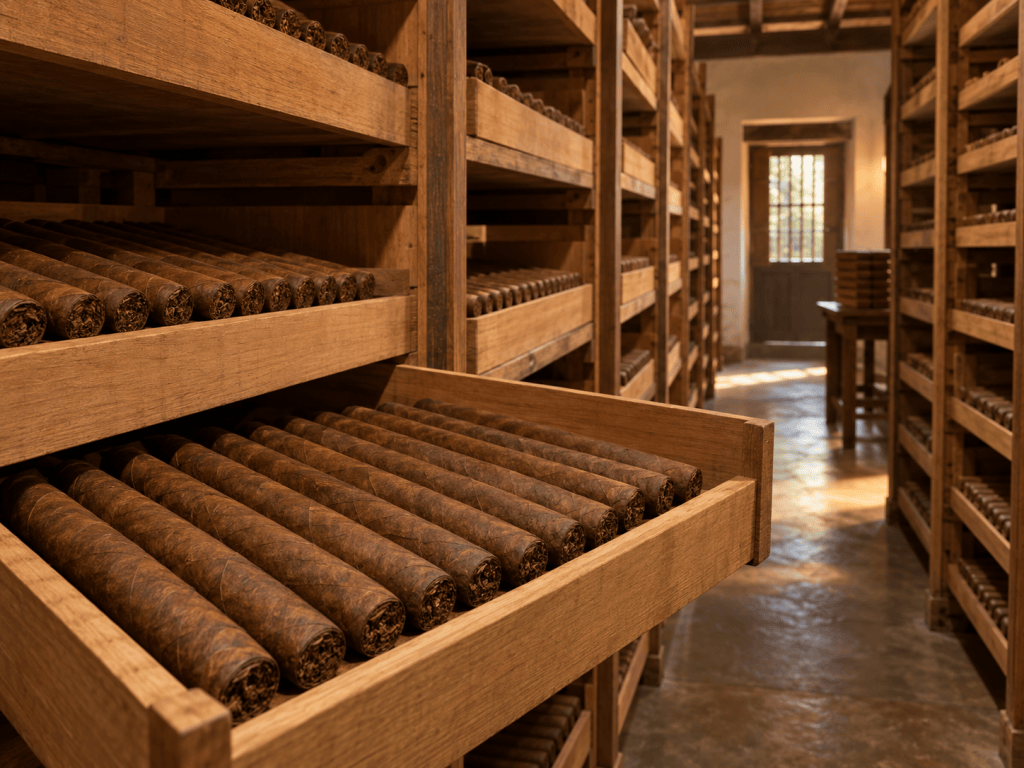
This is another cigar I found buried at the bottom of one of my Tupperdors. I bought the box at the beginning of 2025, which means this stick has now spent 20 months in the humidor.
I’ve reviewed the Cuban Classic 1950 twice before, but both reviews came before I had fully developed my evaluation framework. So why review it a third time? Because this cigar is a great example of añejamiento and what age can do to a blend. I still have two cigars left from the box of 20 I purchased in January 2025, and I’ll probably return to it once it passes the two-year mark.
Before I get into the analysis, I’m going to give away the farm. With this amount of age, this cigar has become transcendent. Am I recommending it? You bet your ass I am.
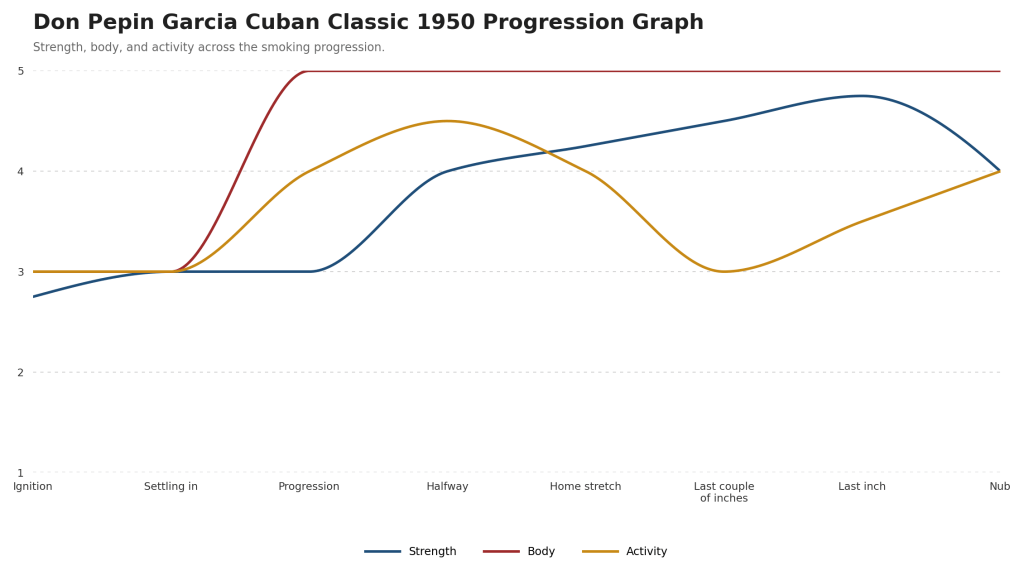
Strength begins around medium, holds steady early, then climbs progressively through the second half until it approaches full in the last inch before dropping noticeably at the nub. Body starts at medium, jumps to full during the first-half progression and remains there for the rest of the smoke. Activity holds steady at first, rises through the progression to its high point at halfway, wanes through the home stretch and last couple of inches, then reverses direction and rises again through the last inch and nub.
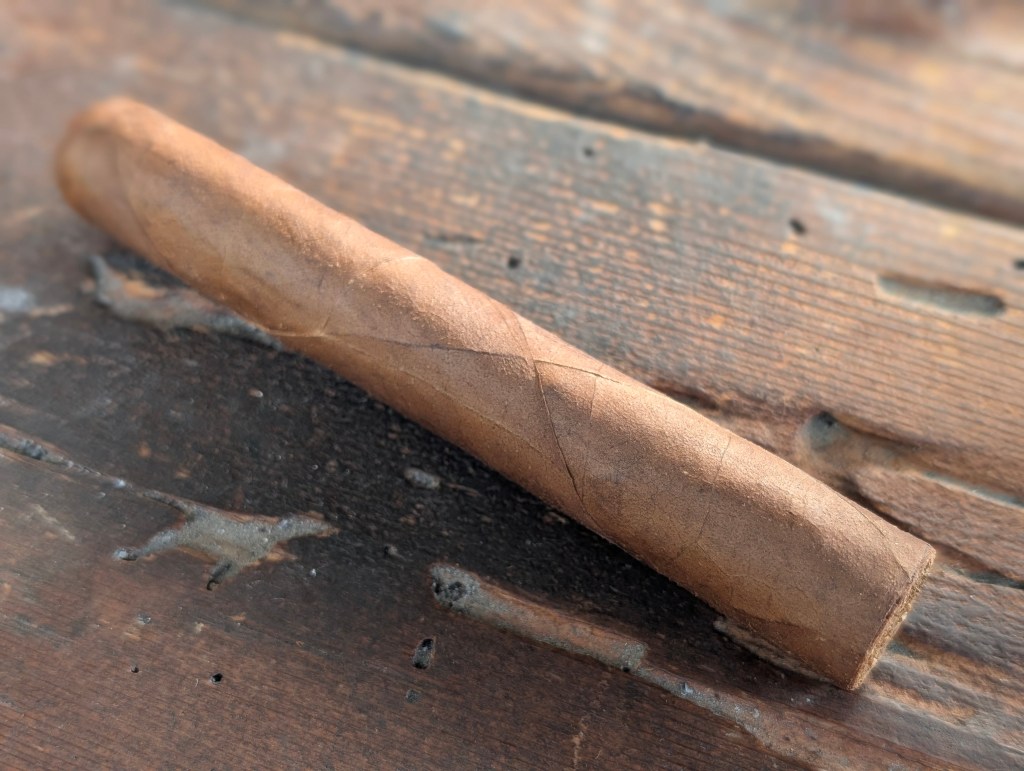
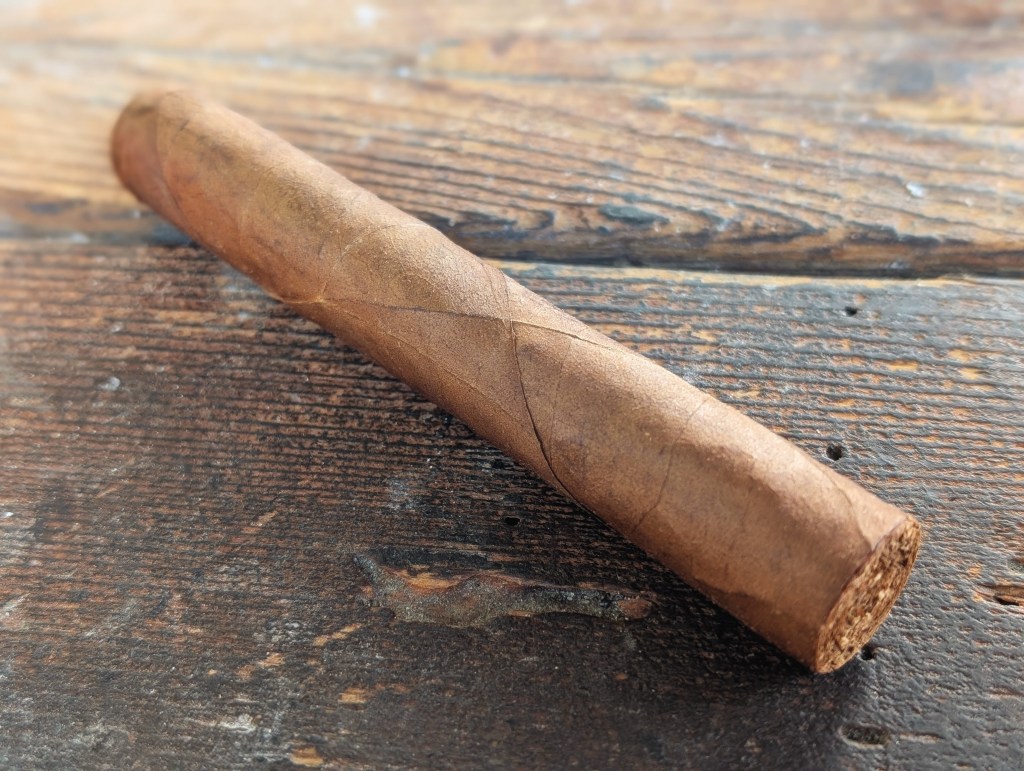
For a 52-ring-gauge cigar, the 1950 feels surprisingly light, though it remains firm in the hand. A light sheen of oil comes off the wrapper, which is more rustic than I remember. Looking at photographs from my April 2025 review, the skin is definitely rougher now. The wrapper has also darkened slightly, though it still looks like a Connie despite being Habano Rosado.
There isn’t much aroma coming from the wrapper. A little hay is all I can detect. The foot gives up more, with subtle notes of malt, bread, and light stone fruit. The cold draw is perfect, providing plenty of airflow with just a little resistance. It tastes of fresh-baked bread and hay.
At ignition, the cigar is absolutely delicious. Light coffee, malt, cream, cedar, roasted hazelnut, and a hint of green peppercorn arrive within the first couple of puffs. The complexity is magnificent. My February cigar was declarative. This is on another level entirely.
A few puffs in, the cigar organizes itself around a core of coffee, malt, cedar, cream, and hazelnut. Light herbal notes of sage, rosemary, and thyme enter, while a faint sugary sweetness appears in the ambience of the finish. The strength ticks up ever so slightly.
I love it when a cigar organizes itself quickly and doesn’t make me wait for it to reveal itself. About an inch in, the sweetness has already developed into dark honey. It isn’t strong, but it gives the profile plenty of lift. Fresh-baked bread, herbs, malt, nougat, and burnt marshmallow move through the smoke. Then there’s celery root. I’ll be damned. There is so much happening that the complexity is becoming difficult to keep up with.
A couple of inches in, the body jumps to full and the smoke becomes thick and luxurious. A light spice enters and immediately moves to the roof of my mouth. As I finish the first third, Melba toast finally appears on the retrohale. I tasted it in the earlier cigars and have been waiting for it to return.
I have to come clean. This has never been my favorite DPG cigar. I’ve given it good ratings before, but it wasn’t something I would automatically reach for. I had to be in the mood for it. But this is something entirely different. The way it’s smoking now, it transcends any mood I might be in.
I’m going to buy another box and let it sit. This cigar needs a minimum of a year of home aging. It’s certainly smokeable before then, but your patience will be rewarded. And yes, it will be a cigar I automatically reach for.
By the halfway point, I have an incredible sense of well-being. The strength has risen a little, and I can feel the profile becoming bolder, but it feels so damn good to smoke this cigar.
I’m really in my happy place.
I’m also not paying attention to the individual flavors as closely as I should. I’m in Honey Badger mode now. I don’t give a shit. That doesn’t mean I’ve abandoned the review. When you smoke a great cigar, everything comes together and works in harmony. The flavors, movement, and construction are all where they should be. Nothing is out of place, and nothing sticks out.
There is an insane equilibrium to the experience that transcends analysis and reaches far beyond language. It isn’t that I don’t want to analyze what is happening. It has simply become difficult to describe. The strength, body, and activity feel perfectly balanced. Flavors are constantly cycling from puff to puff, and I’m aware of all that movement. I’m just too emotionally invested in the experience to care about the minutiae.
As I hit the home stretch, the profile begins to compress. Everything seems to move closer together, though there isn’t a significant rise in strength. The core darkens as the coffee deepens and the cedar picks up a slight char. The dark honey becomes molasses. The compression hasn’t stopped the movement in the secondary layer. Flavors continue slipping in and out of view.
With respect to the core, I’m usually not a big fan of hazelnuts, but the roasted hazelnut has never put its elbows out. It has remained a lovely contrast to the rest of the core. The spice rises slightly and moves to the sides of my tongue. It feels similar to eating fresh jalapeño or serrano peppers.
In the last couple of inches, the shifts in the secondary layer begin to slow. The profile continues to compress and tighten as the classic DPG spice I love moves forward. This entire experience has felt like one enormous transition. The cigar has been in constant motion from the moment I lit it.
Now it seems to be settling into its Nicaraguan roots.
The sweetness abates, and savory elements begin taking its place. Soy sauce, artichoke, and a cheese-like umami emerge.
Then in the last inch, there’s yet another shift. Damn!
Bakery elements suddenly emerge with sourdough, crème Danish, and buttered toast. They provide a wonderful contrast against the darkness of the core. Green peppercorn steps forward at the same time, and I realize it has been a regular customer throughout the entire cigar.
The green peppercorn and bakery elements begin taking turns, almost as if they are vying for position. What a beautiful uptick in activity this close to the end. The spice intensity has also diminished, almost allowing these smaller transitions and moments of interplay to occur. The strength is flirting with full, and I can finally feel the nicotine.
At the nub, the bakery elements and green peppercorn are still competing and driving the activity upward again. You just don’t see this happen! Out of the thousands of cigars I’ve smoked, I have rarely experienced one becoming more active at the end.
I might be mistaken, but the strength, or at least my perception of it, has gone down. That is amazing to me. The spice has become little more than a whisper, which is even more amazing. Then stone fruit comes out of nowhere. I’m sitting here like a deer in the headlights, stunned by this sudden burst of activity.
The honey sweetness returns to the finish. Damn, this is good!
I’m holding the cigar at the tips of my fingers because I don’t want it to end. The smoke isn’t even hot. I finally mount it on the end of my PerfecDraw so I can savor the last bits of its goodness. I make it down to the final half-inch before the cap delaminates from the binder.
I’m almost at a loss for words. I came into this smoke with few expectations, and nothing could have prepared me for what this cigar has become. It has been a study in how aging can have a positive effect on a blend.
This cigar is aptly named Cuban Classic because, like a Cuban cigar, it doesn’t come into its own for quite a while. I always thought it was a good cigar. But 20 months of age has made it transformative.
The Cuban Classic 1950 blew through my evaluation framework, something very few cigars have done. The interesting thing is how it fulfilled every pillar of my framework. With other cigars, I can usually identify what the profile is doing and how it performs within each part of the framework. Here, the experience was so complete that I felt that fulfillment rather than observed it. With all of its constant movement, the cigar left me no choice but to accept what it was doing and ride it out.
This is a cigar for the ages once it has had a good long rest.
As of this writing, the best price I found for a box is at Atlantic Cigar which has it for $150.47 or around $7.50/stick. But if you are a VIP member, the price goes WAY down to $110.95 or $5.54/stick. They have fivers available as well, but I recommend getting a box to smoke them over a long period of time.





Leave a comment