
Wrapper: Costa Rica: Puriscal
Binder: Costa Rica: Puriscal
Filler: Costa Rica: Puriscal
Size: Toro (5.9 x 52)
Strength: Mild-Plus → Medium (final third)
Body: Full (final third)
Price: $6.00
Factory: IGM Cigars, Pavas, San José, Costa Rica
Blender:
Release: February 2025 (Limited Edition)
Smoking Time: 58 minutes
Experience Rating: 80
After reviewing the IGM Zarpe, I was excited to try the Flor de Puriscal, as it represented the other end of the spectrum of IGM’s offerings. At $6/stick, it falls squarely in the affordable range. Normally, I’d do a full technical review on new cigars, but after smoking two of these previously, as you’ll see, a technical review would’ve been overkill for this cigar.
According to IGM, this cigar honors the tobacco flower. Here’s IGM’s marketing copy:
Each tobacco plant produces a flower. Most growers remove it as soon as it appears, so that all the plant’s energy is concentrated in the leaf.
We decided to honor her.
Flor de Puriscal was born from this idea: the most beautiful and rarest of the harvest, reserved for very few. A limited edition of just 105 bundles, in various sizes, grown in the same mountains of Puriscal that give it its name.
It’s not a product line that’s repeated every year. It’s a product line that’s harvested, processed, and sold out.
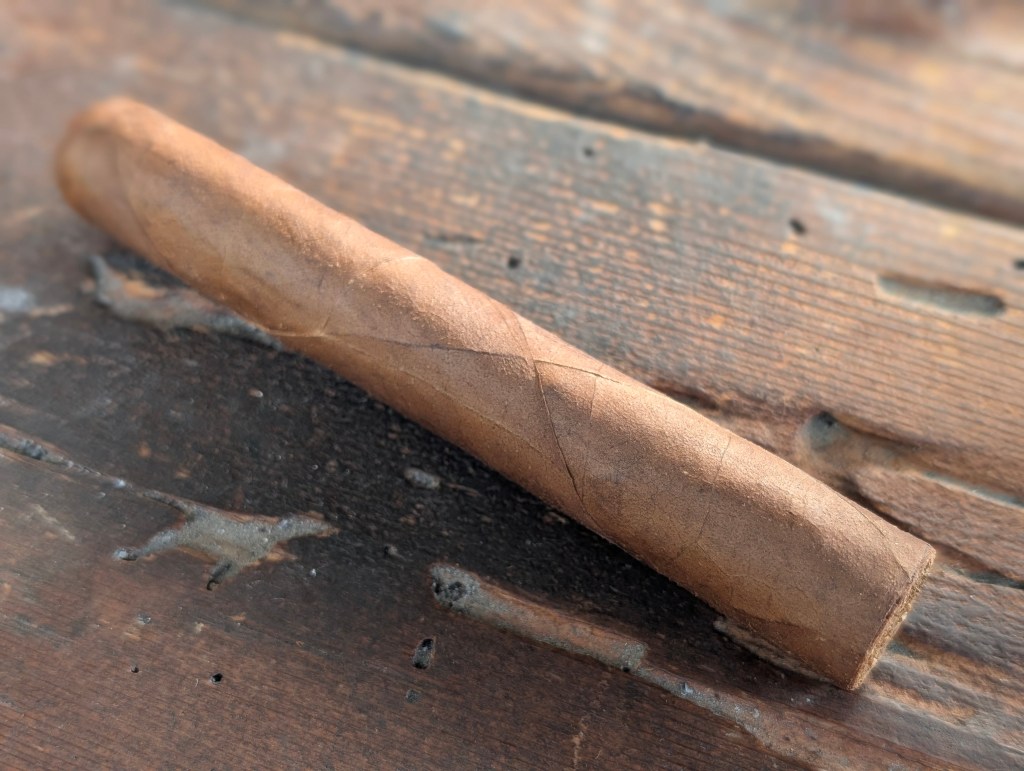
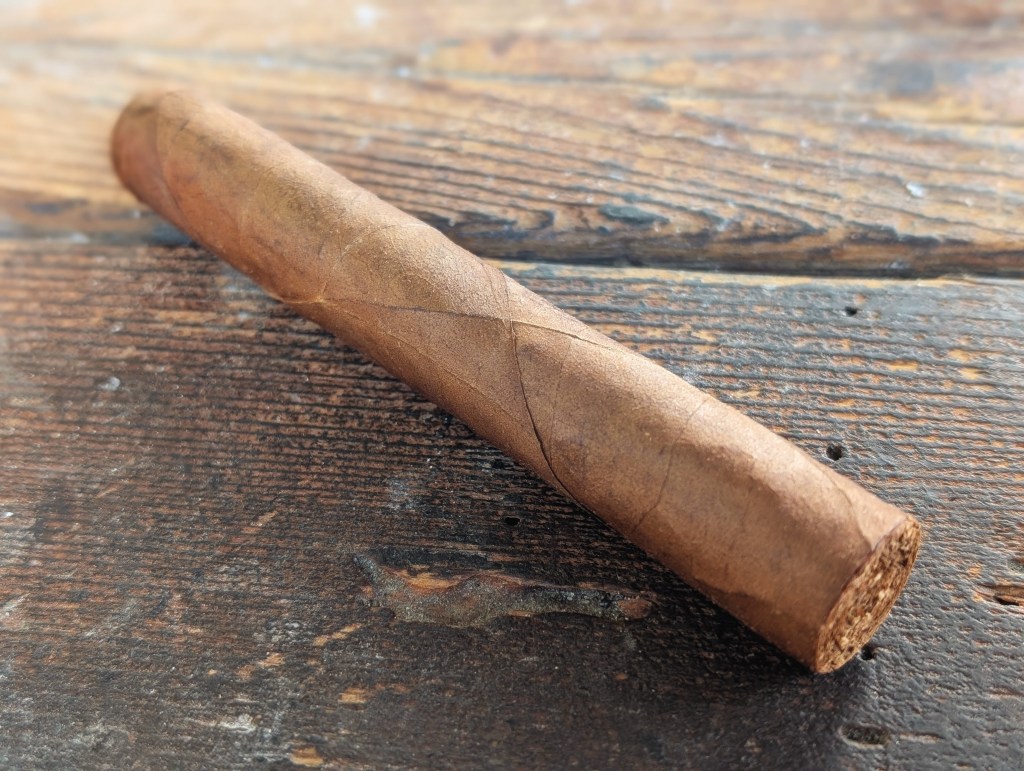
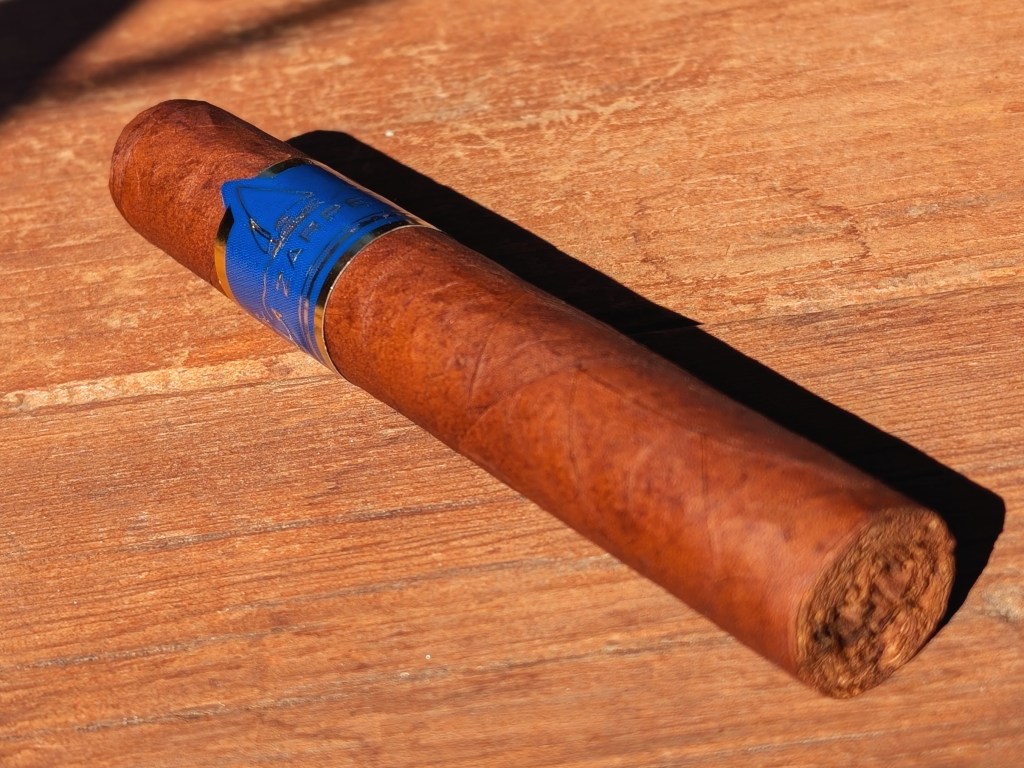
I was encouraged by how yellow the cellophane was when I removed the cigar. It has obviously been stewing for a while. The skin is smooth with just a few veins and a light, matte finish of oils. The wrapper presents a little sweetness and rich tobacco, while the foot carries a bit of fruity sweetness. The cold draw is unremarkable in flavor, but it has just the right amount of resistance.
Lighting it up, I pull back. It’s a very unique start, filled with baking spices, nuts, and leather. Sugary sweetness follows in the background, lingering on the finish. To be honest, I don’t know how I feel about this profile. I like it, but it’s so different from most of the cigars I smoke. I expect the usual suspects: coffee, cocoa, or black pepper. But I have no reference point for this cigar.
Light coffee finally arrives about an inch in, but it’s not a dominant player. If I were to identify a core to this cigar, it would be hazelnut, nutmeg, leather, and a touch of coffee. Like I said, it’s different.
Strength is mild-plus, and based on my two previous cigars, the strongest it gets is medium. That’s actually not a bad thing. With a profile like this, I don’t think I’d like the nutmeg to get too strong. But the strength, or lack thereof, makes sense. Since most growers top the panicle to concentrate the plant’s resources on the leaves, leaving the panicle in place divides those resources between the leaves and the flowers.
Cream enters about an inch and a half in. The coffee steps forward, asserting itself, but not taking over yet. There’s a subtle spice forming on the roof of my mouth, but it’s almost a whisper. Luckily, the background sweetness provides a nice lift to the profile.
As I get deeper into the first half, the spice begins to assert itself and intensify. It’s very pronounced at the beginning of the puff, but recedes quickly during the finish, leaving the sweetness to lift the profile the rest of the way.
I’m nearing the halfway point, and I have to say that I like the profile. But you’ll notice I haven’t mentioned transitions or complexity. There haven’t been any transitions, and the flavor profile hasn’t evolved at all.
At the halfway point, I begin to wonder what this cigar would be like if IGM had topped the plants instead of allowing the flowers to pull resources away from the leaves. Would there have been more complexity?
Into the second half, I finally get a transition as bread notes of sourdough and yeasty bread appear. The coffee begins to dominate the core, and a nice, creamy toffee joins it. It’s a little excitement after a somewhat pedestrian, bordering on boring, first half.
Strength is flirting with medium, but it’s not quite there yet, though the body is getting thicker. Spice is now ever-present, though it’s still fairly moderate.
Roasted cashew and peanut join the party. The retrohale reveals a surprising basil-like essence. It also brings out Cheerios.
Into the final third, the spice intensity picks up and becomes mouthcoating. It’s still not overpowering, but it’s much more pronounced now. Strength has finally hit medium, while body is now full, with each puff producing a thick cloud of white smoke.
I’m still enjoying the profile, but I’m a little uninspired by it. Other than that single transition, there hasn’t been much to this cigar. It was the same with my two previous sticks. On top of that, this stick is a fast burner. I finished the other two in less than an hour, and my puff rate wasn’t fast at all.
Nearing the last inch, the profile begins to turn dark as the spice really asserts itself and the nutmeg gets a bit stronger. It’s not enough to make the cigar unenjoyable, but it’s not my favorite flavor.
As I hit the last inch, I get a hit of burned rubber, like someone did a burnout. Not at all pleasing. The spice has really intensified, and I feel as if I just ate some hot salsa. At this point, the retro is the only interesting thing, introducing some nice savory elements in the form of soy sauce, green peppercorn, shiitake mushroom, and what I can only describe as demi-glace. It’s like an au poivre sauce. That was a good way to get over the burned rubber.
I let the cigar burn out with just under an inch left.
This is a yard-gar.
It’s not bad, but it’s nothing to write home about. If you’re curious about it, it’s worth buying a couple. No matter how romantic the marketing copy may sound, I’d rather spend my money on the Zarpe and IGM’s other lines.
Admittedly, I’m a little disappointed with this blend. I was excited to try it because it’s a Costa Rican puro. If I were to give any advice to IGM on this, I’d tell them to lop off the flowers so the leaves can really express themselves.
If you’re curious about these, you can buy them at Little Havana Humidor. They also carry a decent selection of IGM’s other lines. But the best part is that they’re here in the US, so you don’t have to deal with international shipping costs.





Leave a comment