
Wrapper: Brazilian Arapiraça Maduro
Binder: Dominican
Filler: African, Brazilian, Dominican
Size: Double Figurado (6 × 58)
Strength: Medium
Body: Medium → Full (final third)
Price: $6.00 per cigar ($149.95 per 25-count bundle, Atlantic Cigar)
Factory: La Aurora, Dominican Republic
Blender: Manuel Inoa
Release: Available by October 2026
Smoking Time: 1 hour 35 minutes
Experience Rating: 91
I’ve smoked a few of these since I got my 25-count mazo several weeks ago. Unlike the Corojo, which was ready to smoke a week after it arrived, the Brazilian Maduro took a while to be ready for review. I loved it when I wrote my early report, but it wasn’t integrated enough at the time for a fair assessment.
But it’s ready now.
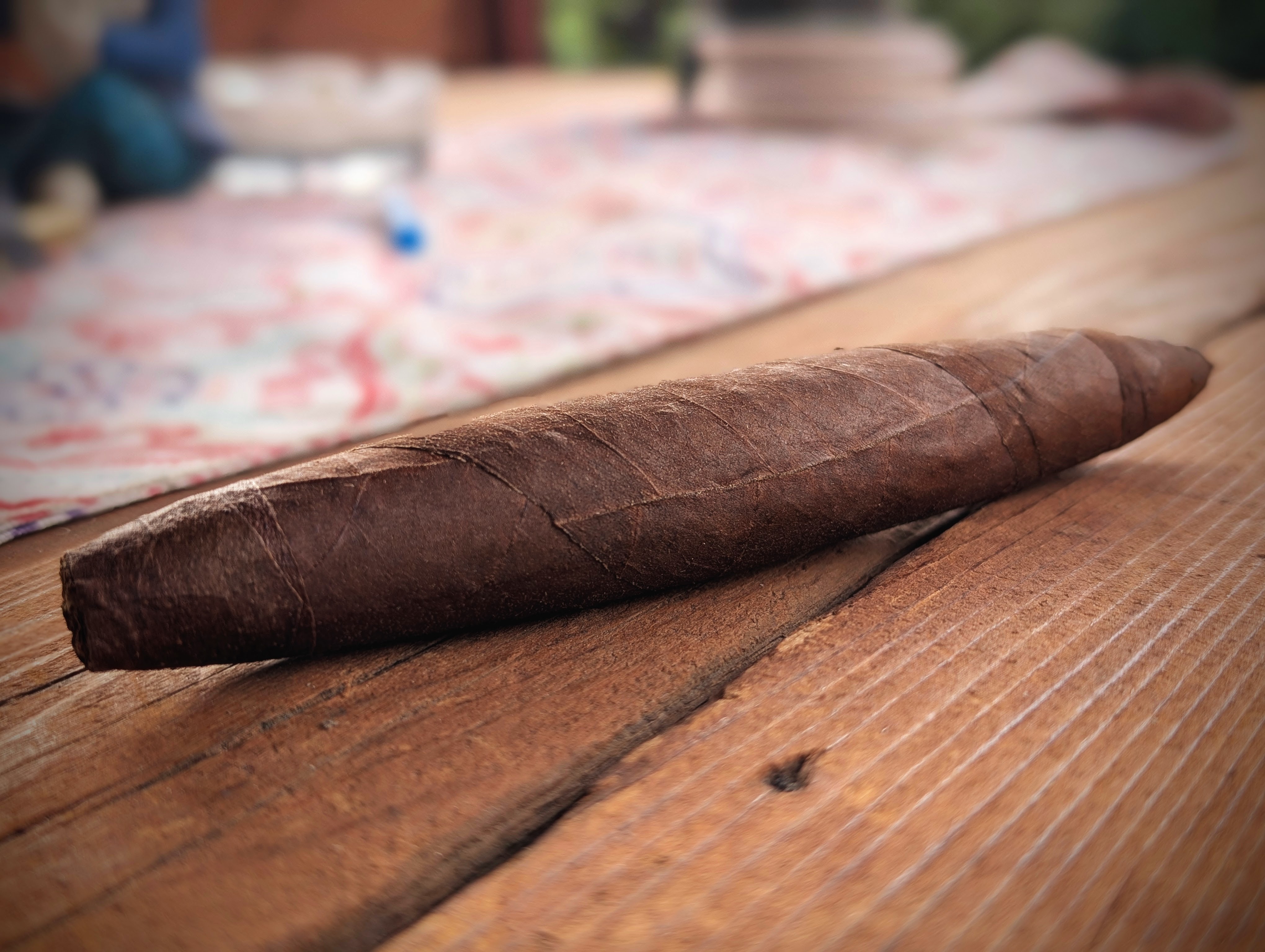
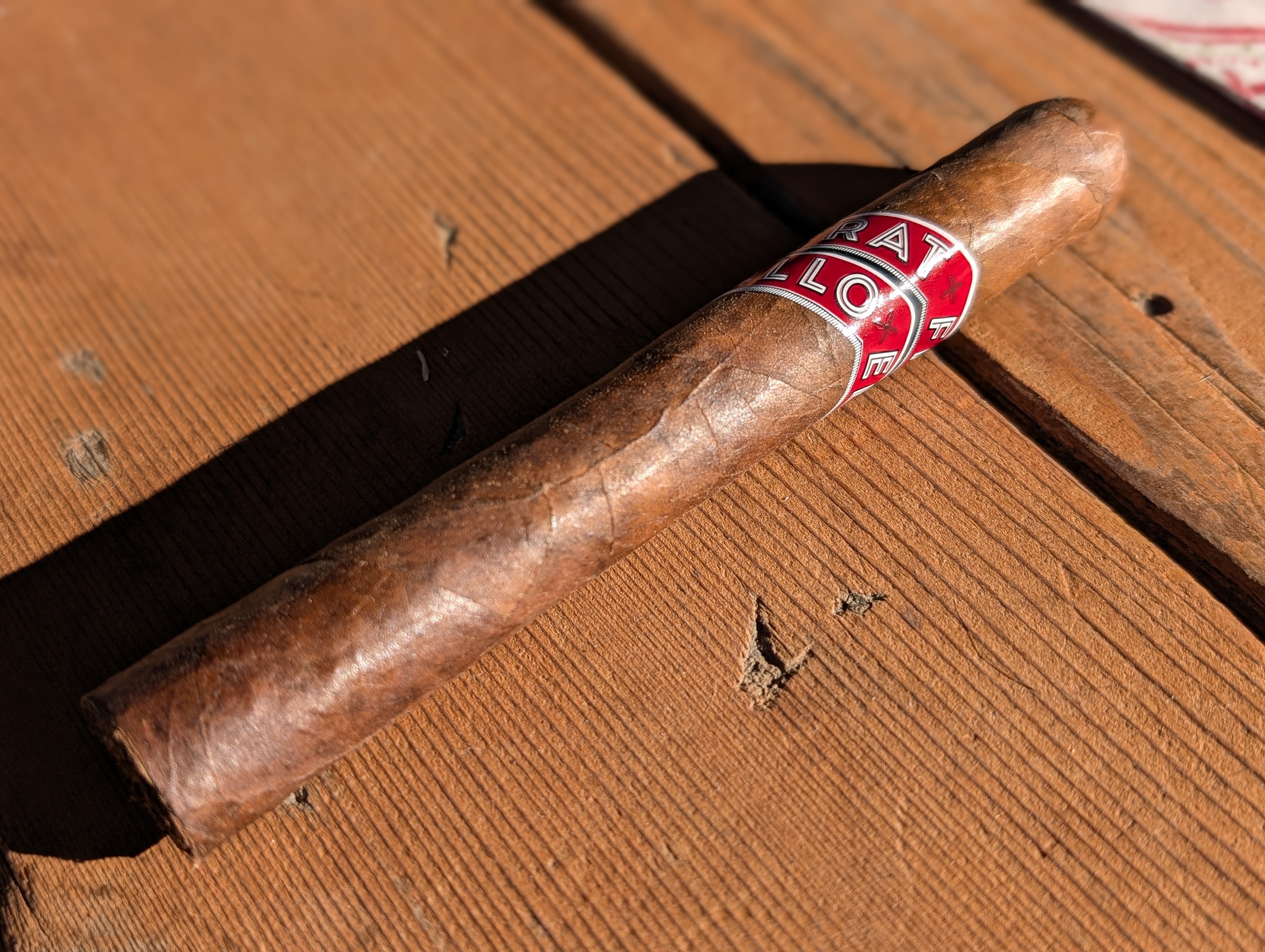
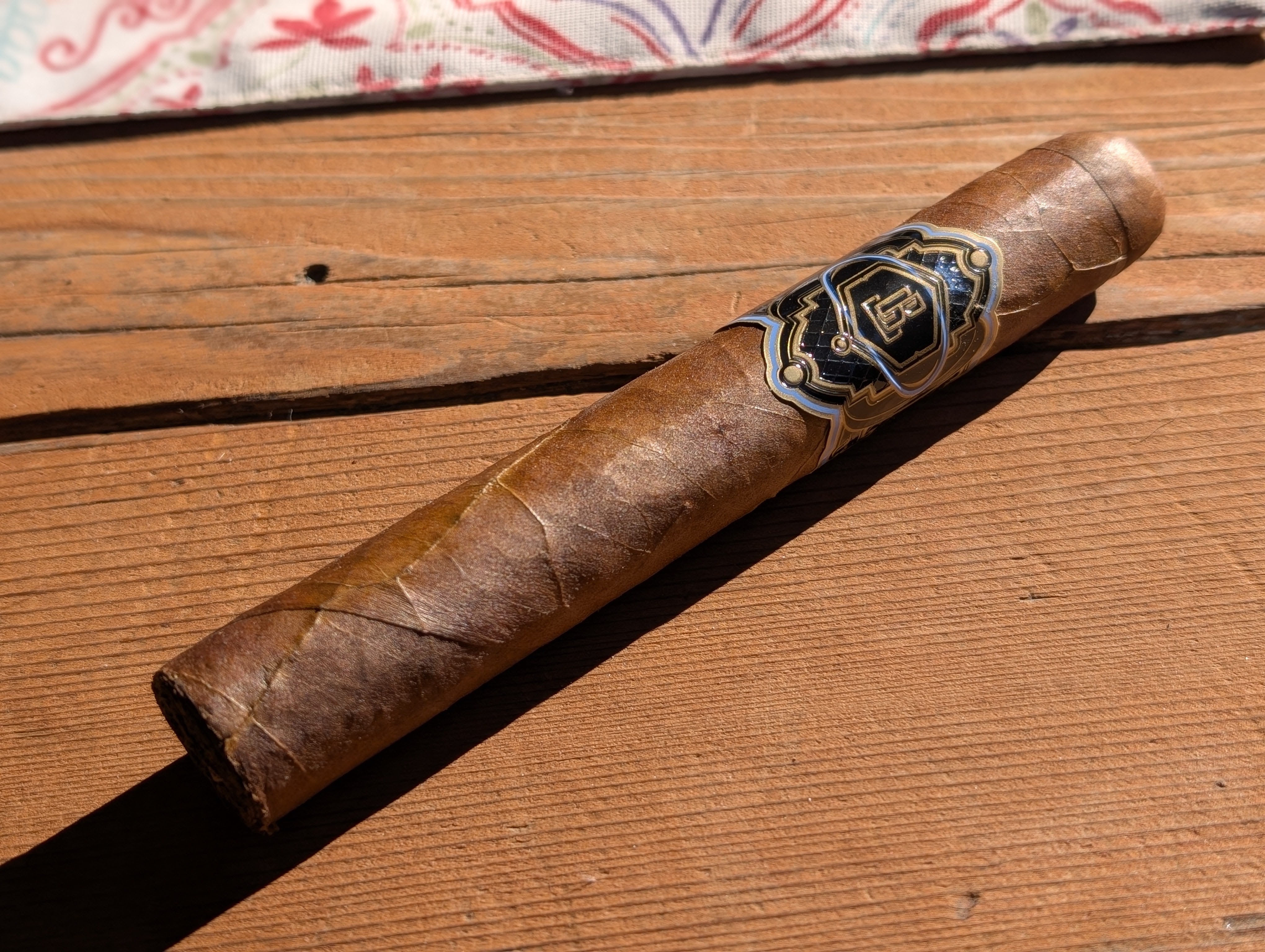
At first blush, it reminds me of a bulk bundle cigar. While it’s neatly rolled, it looks rustic, with a patchwork of raised veins across the wrapper’s surface. But the wrapper has a matte, oily sheen. It’s also stinky.
The wrapper has layers to its aroma. A slow sniff reveals sweet citrus flowers that quickly give way to sourdough bread, then finish with sharp blue cheese. It’s pretty complex, with successive sniffs revealing barnyard, hay, and dried fruit. Through the small opening at the foot, I get only dried apricot.
The start always surprises me because it’s like having a breakfast of Cream of Wheat with a little evaporated milk and a sprinkling of dark brown sugar, followed by a sip of coffee. Talk about taking me back to the 1960s!
The cigar is in flavor-accumulation mode in the first inch, as a procession of flavors enters the profile: cedar, cashew, malt, molasses, baking spices, soy-sauce umami, earth, green peppercorn, and white pepper. A gentle spice alights on my tongue and tingles like I just drank some fizzy water. Past experience has shown that things don’t get really interesting until I reach a wider section of the cigar.
Admittedly, despite all the flavors that have entered, it’s a fairly linear start, with the spice offering the only real movement as it shifts to the top of my mouth and feels like it’s trying to define the profile’s space. Luckily, the taper is sharp at the foot, so that flat period doesn’t last too long.
Just shy of two inches in, the profile shifts noticeably. Fruity and citrusy elements enter. The cream suddenly thickens. The cedar chars slightly, then takes the lead, moving to the center, followed by malt, coffee, and white pepper.
Deeper into the first half, a flowery sweetness literally washes in on the finish like a wave, then gradually morphs into herbal notes of rosemary and sage. I’ve never seen that kind of behavior on the finish.
As far as body and strength go, it’s medium all around, with strength barely medium. The body is interesting because I feel like it wants to thicken. If past experience is any indication, it will reach full past the halfway point.

As the burn line reaches the full diameter of the cigar just shy of halfway, the cream asserts itself and moves forward. It doesn’t thicken so much as become more pronounced. It softens the profile, making it very smooth.
Speaking of burn lines, I normally don’t talk about construction unless there’s a problem, but in all the sticks I’ve smoked, I haven’t needed to make any corrections other than straightening out my initial lighting. This stick will delight the burn-line police.
Into the second half, the green peppercorn steps up and feels like it’s competing with the cedar in the core. While no new flavors have entered, activity in the secondary layer picks up as the flavors move in and out of view. It’s not a high level of energy, but the movement is a welcome change from the relatively benign progression.
As I reach the final third, the profile shifts. The movement slows, and the body thickens to full, as expected. Then delicious chocolate-covered toffee with nuts comes forward. It’s like smoking a Heath bar. The coffee and cedar in the core intensify slightly, forming a nice complement to the toffee.
And here’s where I’m a little conflicted.
The flavors in this cigar are tremendous, with both breadth and depth. I’m a big fan of the Brazilian Arapiraça wrapper, and the Maduro really showcases it. If I were just doing a flavor-note inventory, this would receive high marks. All the flavors are harmonious and complement each other incredibly well. But the linearity of the progression, despite that toffee twist, makes the experience feel pedestrian.
It’s still a good cigar. But it doesn’t achieve the greatness that its Corojo sibling enjoys. With that cigar, I pictured myself sailing in the Caribbean while the sexy flamenco song Frente al Mar played in the background. With the Maduro, I’m enjoying the flavors immensely, but I’m not nearly as moved.
And here’s the thing: its profile is unique. It’s not something I’ve tasted before. That’s actually pretty exciting. But the lower energy doesn’t resonate with me as much as I’d like. That said, I want to be clear that I like the cigar a lot.
I just don’t love it. Yet.
I say “yet” because I have a feeling this stick will need many more months of aging. I see some real potential in this cigar, considering its gorgeous flavor profile. Hopefully, it won’t take as long as the Don Pepín García Cuban Classic 1950, which took almost two years to achieve greatness.
So, as far as this review is concerned, I’m going to chalk it up as an initial check-in.
Despite my tepid evaluation, this is still a good cigar. You can buy it at Atlantic. I’d recommend the fiver for $54.95 if you’re curious. But that bundle price at $149 or $139 if you’re a member is tough to ignore.





Leave a Reply