
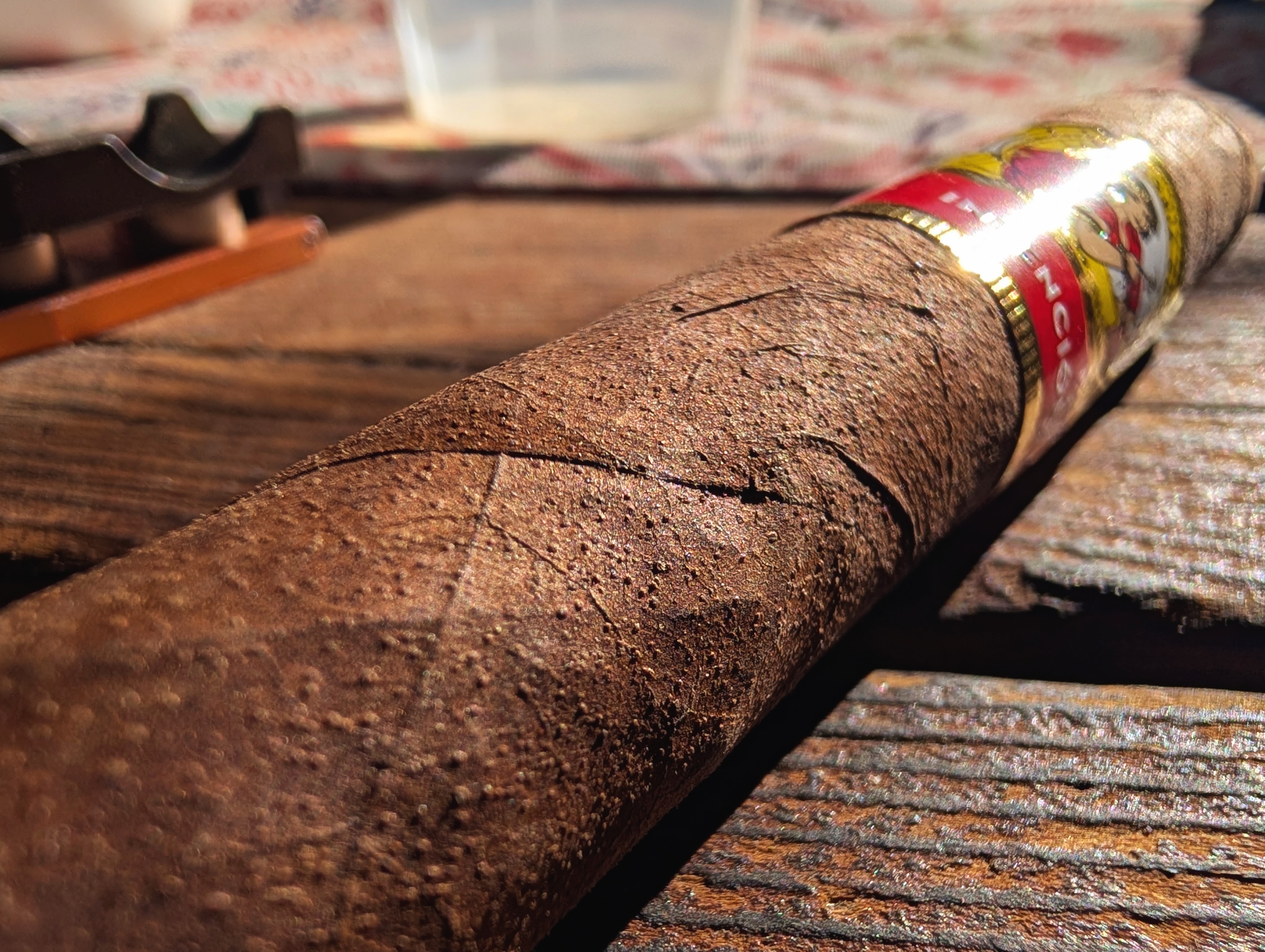
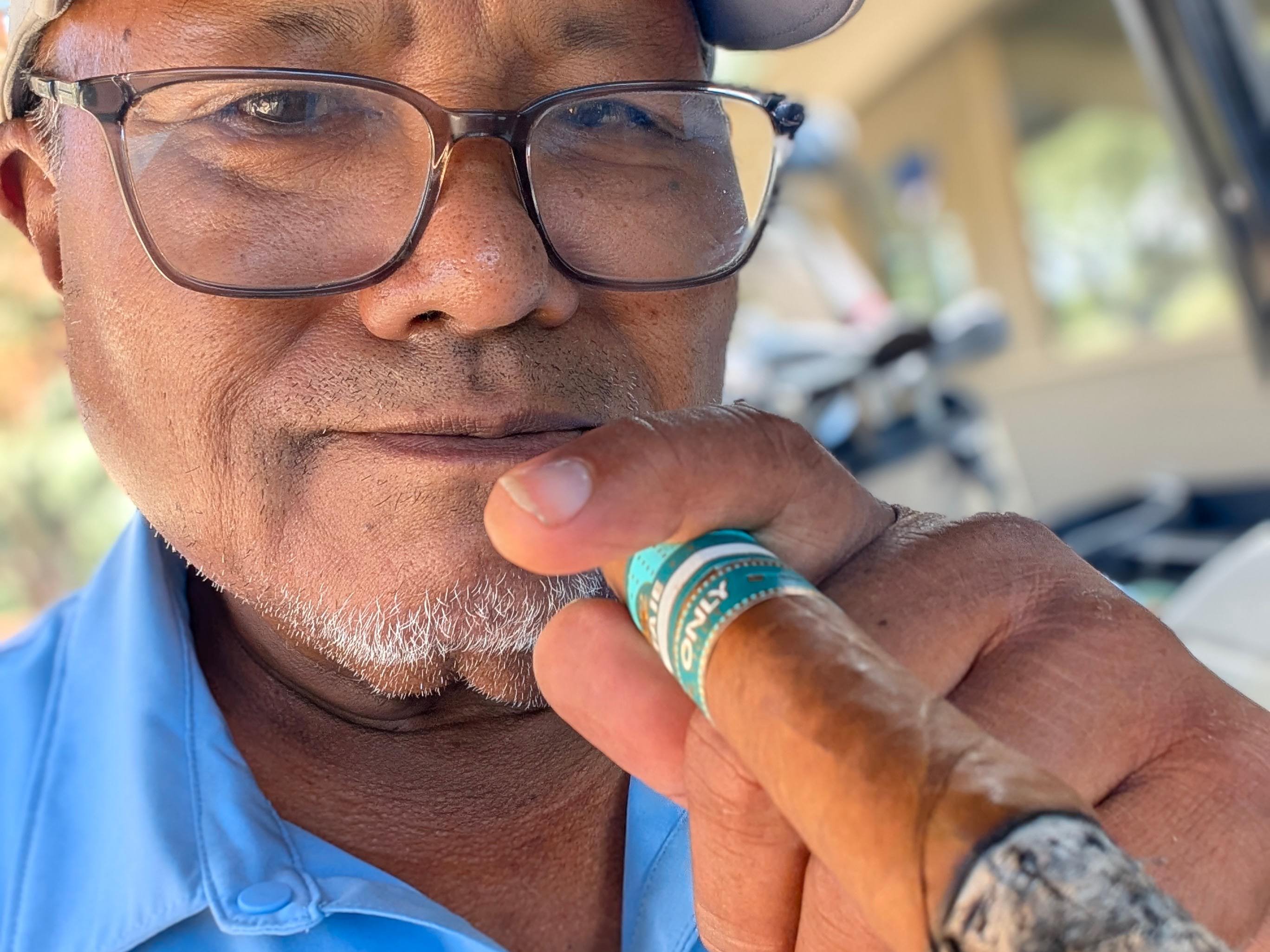
The other day, I pulled a La Gloria Cubana Intención and a Crowned Heads Mil Dias Maduro out of my tuppers. As I slipped the cellophane off the Intención, I noticed just how toothy its skin was. Take a look at the title image. That gorgeous skin was like sandpaper!
Talk about delicious! I looked at those little bumps and thought, Those oil-filled bundles of joy are making me a very happy man.
But then I got curious and checked myself. I’d heard tooth described as pockets of oil so often that I’d accepted the explanation without question. This was something I’d known for years. And the hell of it is, if you talk about tooth as oil pockets in conversation with other smokers, they’ll nod right along.
So, I decided to find out what tooth is really made of. After doing my research, I’m almost embarrassed to say that I’ve been wrong about tooth all along.
And unfortunately, so has much of cigar culture.
Tooth is salt.
When I found that out, I had a bit of a holy shit moment. How many people had I told it was pockets of oil? I’m going to rectify that now, because that’s what this publication is about: exploring the cigar world and sharing what I discover. I’m not here to be a teacher. I’m a fellow learner.
My exploration led me to a paper published in 1916 by Charles S. Ridgway called Grain of the Tobacco Leaf. The paper described the bumps, examined their structure, and analyzed what they contained. More than a century ago, someone had already investigated what I’d been confidently calling an oil pocket. D’oh!
Ridgway used grain to describe the crystalline bodies responsible for those little pimples. We use tooth to describe a wrapper’s roughness. For this discussion, they’re one and the same.
Some grain was embedded within the leaf, where the accumulated crystals distended the cells. Other forms occurred on or immediately beneath the leaf’s surface. Those exposed crystalline deposits bring us into the discussion of plume. And don’t worry, we’ll get to that. But suffice it to say that those little, glittering flecks on the surface of a wrapper are also salts.
But Ridgway went beyond just observing them. He painstakingly separated grain from the surrounding leaf material so it could be analyzed. He found a mixture consisting chiefly of calcium salts associated with citric and malic acids, with smaller amounts of magnesium and potassium. Calcium malate was specifically identified through examination of its optical properties.
So, now that we know what’s inside the bumps, let’s look at how they’re formed. Simply put, it starts with curing.
Ridgway found that grain began forming during curing. As the harvested leaf yellowed and turned brown, salts began crystallizing inside its cells and gathering into larger bodies. In the leaves he studied, definite grain had formed just nine days after harvest.
Forty years later, A. Boyd Pack documented a difference you could feel. In his 1956 study of shade-grown tobacco, Pack compared leaves from the lower part of the plant. A faster cure produced a smoother texture, while a slower cure left the leaves feeling like sandpaper. That’s exactly how I described the Intención.
But it doesn’t stop there.
Curing starts grain formation. Fermentation allows it to develop further. Ridgway found that after fermentation, the grain had gathered into larger clusters and was more pronounced at the leaf’s surface. He proposed that moisture dissolved some of the smaller deposits, allowing their salts to move and collect into larger grain bodies.
This development occurs throughout the leaf tissue, including deposits too small or too deeply embedded for us to see. Some crystals fill and stretch the cells, creating bumps. Others become exposed at the surface. The tooth we feel, and the crystalline glints we see, are the visible expressions of the crystals forming.
And that brings us to post-roll aging.
Ridgway offered a clue from stored leaf tobacco. He noted that a poorly burning Pennsylvania crop was gradually burning better during storage. He suggested that the slow gathering of grain material into larger bodies might help explain the improvement. That was his proposed explanation for the change.
It makes sense that existing salts could continue to redistribute and crystallize as moisture conditions change, including after the tobacco has been rolled into a cigar. That could include tooth formation, but I think the more interesting one is plume.
For instance, the GIF below is of the Mil Dias Maduro I pulled out.

Look closely at the GIF, and you’ll see little glints on the wrapper. There aren’t many, but they’re there. I’d had that cigar stewing in my tupper for just over six months. I always check my cigars for crystals, and there weren’t any visible when this batch arrived. Now there are. The development we’ve been discussing can continue while a finished cigar sits in storage.
Theoretically, with enough time, the crystals can become numerous enough to be called plume. But I’ve never seen that degree of buildup. The most I’ve seen was on the Killer Cameroon I shared a while back. And if I’m being honest, I don’t have the kind of patience to see if a cigar will get to that point. I don’t collect. I smoke.
A question I’m anticipating is whether there are optimal temperatures and humidity levels for crystal formation. To be honest, I have no idea. I use 65% Boveda packs in my containers; most sit on a shelf in my office, except for my out-of-sight-out-of-mind special sticks in the closet.
But I do have a theory.
I have a collection of Montecristo 2000 LE Nicaragua cigars that are 26 years old. They’re all slightly toothy, but I’ve never seen crystals on their wrappers’ surfaces. My theory is that curing and fermentation shape the leaf’s chemistry in ways that help determine its potential for further crystal formation during storage. Some leaves may come out of processing better suited to that continued development than others.
Given all I’ve discussed, where does that leave us?
None of this changes how I feel about a toothy wrapper or those little surface crystals. I still take both as signs that I’m in for a great experience. Knowing they’re salts doesn’t make that gorgeous, sandpaper skin any less inviting or those little glints any less exciting. At least now, I know what they are.
I have to admit that part of me feels foolish for perpetuating an old wives’ tale. But I take comfort in the fact that I wasn’t the only one who thought that tooth and plume were dried oils.
Tooth is salt.






Leave a Reply