
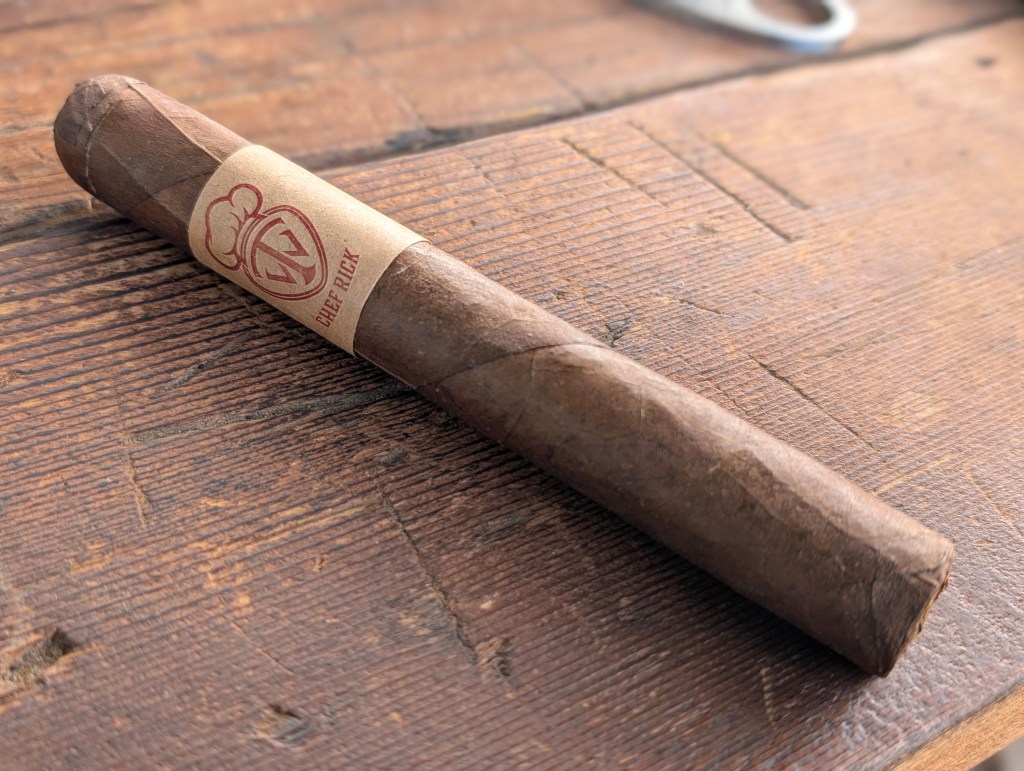
Wrapper: Habano 2000
Binder: Ecuadorian Sumatra
Filler: Nicaragua: Condega, Estelí, Jalapa, Ometepe
Size: Toro (6 x 52)
Strength: Medium → Medium-Plus (last inch)
Body: Medium-Plus → Full (late)
Price: $12.99–$13.00 single / $56.83 5-pack / $584.55–$649.50 box of 50
Factory: Tabacalera Pages de Nicaragua S.A., Nicaragua
Blender: Rick Rodriguez and Raymond Pages Raffo
Release: May 2026 (Limited Edition)
Smoking Time: 1:35–1:45
Experience Rating: 98
West Tampa Tobacco has always been hit or miss with me. I’ve smoked the core lines several times over the years, and while they were all good cigars that would probably score well within my framework, they never resonated enough for me to review them.
That doesn’t mean I stopped paying attention.
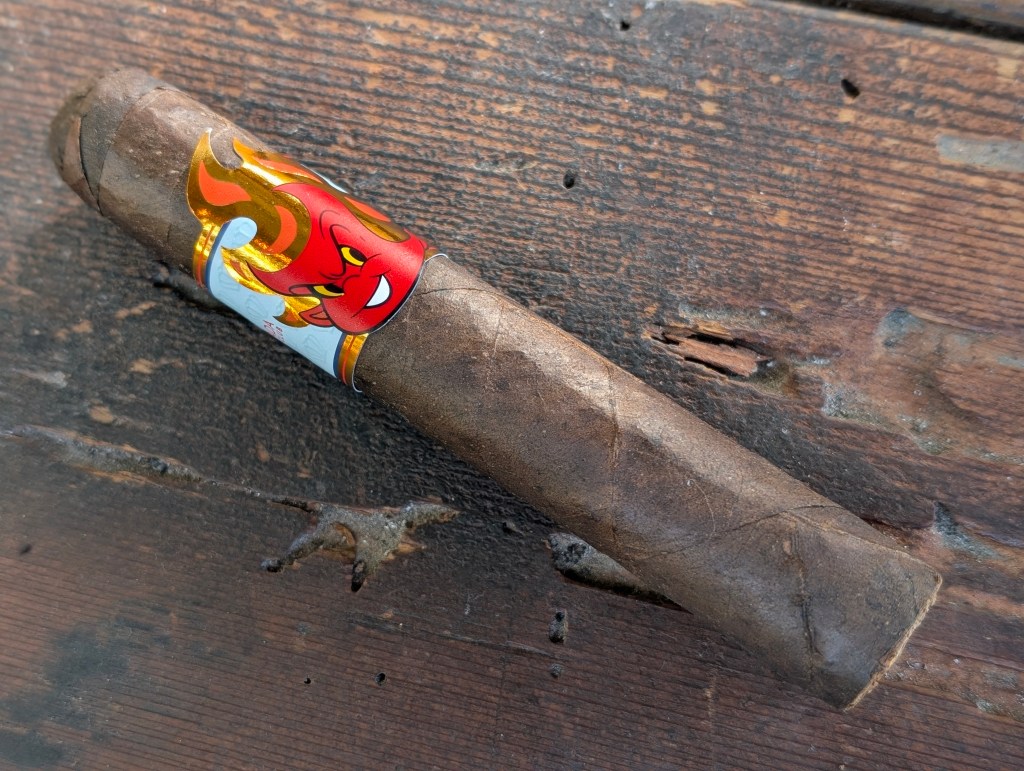
Rick Rodriguez’s culinary line intrigued me, especially the Devil Crab, but I couldn’t get my hands on any. Eventually, they landed in my interesting but not readily available category. In other words, it was okay to forget them.
Then the press release for Chef Rick came out during PCA 2026, and one name immediately changed the equation: Raymond Pages.
Say what you want about Cigar Page House Blends, but if you malign Raymond Pages, we might just have a problem. To me, Pages is one of the bright, rising stars coming out of Nicaragua. The cigars he has produced under budget or tobacco constraints are nothing short of amazing, and he’s on the verge of releasing his own personal brand.
What fascinates me about his blending is the playfulness. There’s an almost irreverent refusal to give the tobaccos their expected roles. He seems to look at a combination of leaves and say, I know what people think this is supposed to do. Now let’s give them something else.
Chef Rick is something else.
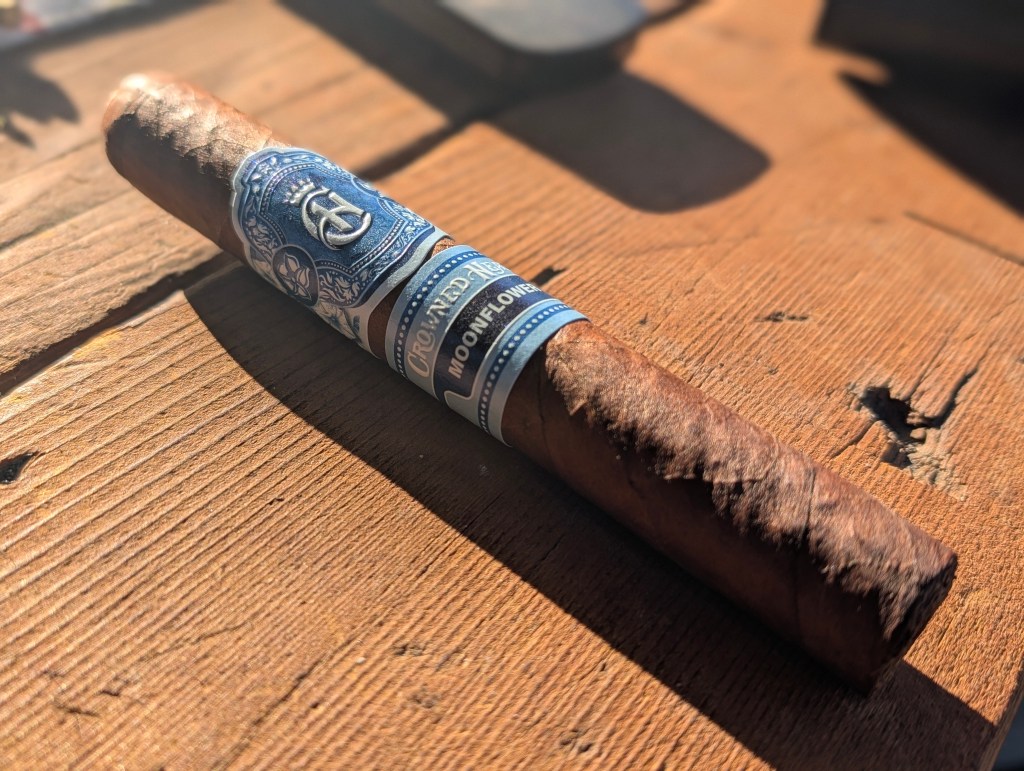
Its Habano 2000 wrapper is half-smooth and half-rustic. The cigar is evenly rolled, but the veinage leaves just enough roughness to keep it from looking polished. It reminds me of chefs I’ve known over the years. They may look dapper in their jackets, but there’s usually something rough about them.
The skin is toothy and glows beneath a light coat of oil. The wrapper smells like a buttered croissant with strawberry jam before resolving into toasted sourdough. The foot is bready and fruity, with no barnyard from either one. Then the cold draw takes a sharp left turn into sauerkraut and wet grass.
The first puffs are just as unexpected. Fresh bread, cedar, and white pepper arrive together, followed by nutmeg, caraway, and gentle cardamom. The baking spices don’t settle into one place. They dance playfully across the roof of my mouth while thick smoke gives the profile a creamy texture and medium-plus body. Strength begins a touch below medium.
The profile settles almost immediately. There isn’t a thematic core yet, but the profile already feels organized. The flavors seem to know where they belong.
Fresh-baked bread steps forward through the first inch and folds into a cashew cream lightly laced with caraway. I’m not generally a fan of caraway, but here it contributes just enough savory tension to keep all that creaminess from becoming too soft. Then light coffee enters and connects with the bread, fresh cedar, and nutmeg. They settle onto a thick bed of cream, and the core takes shape.
The body remains medium-plus, rich and luxurious, but the presentation is remarkably restrained. There’s a certain Cuban bent about it.
I’m not talking about the flavor profile. I’m talking about the fullness of the flavor and the composure with which it’s delivered. Like a Cuban cigar, the Chef Rick isn’t holding back. It simply doesn’t need to flaunt its power.
The all-Nicaraguan filler tells me to expect structure, boldness, and force. The structure is certainly there, and I can sense the power underneath it, but nothing is in my face. A gorgeous background sweetness forms on the finish and wraps itself around the profile as fresh-baked bread moves among nutmeg, cinnamon, clove, and caraway.
What strikes me most is the energy.
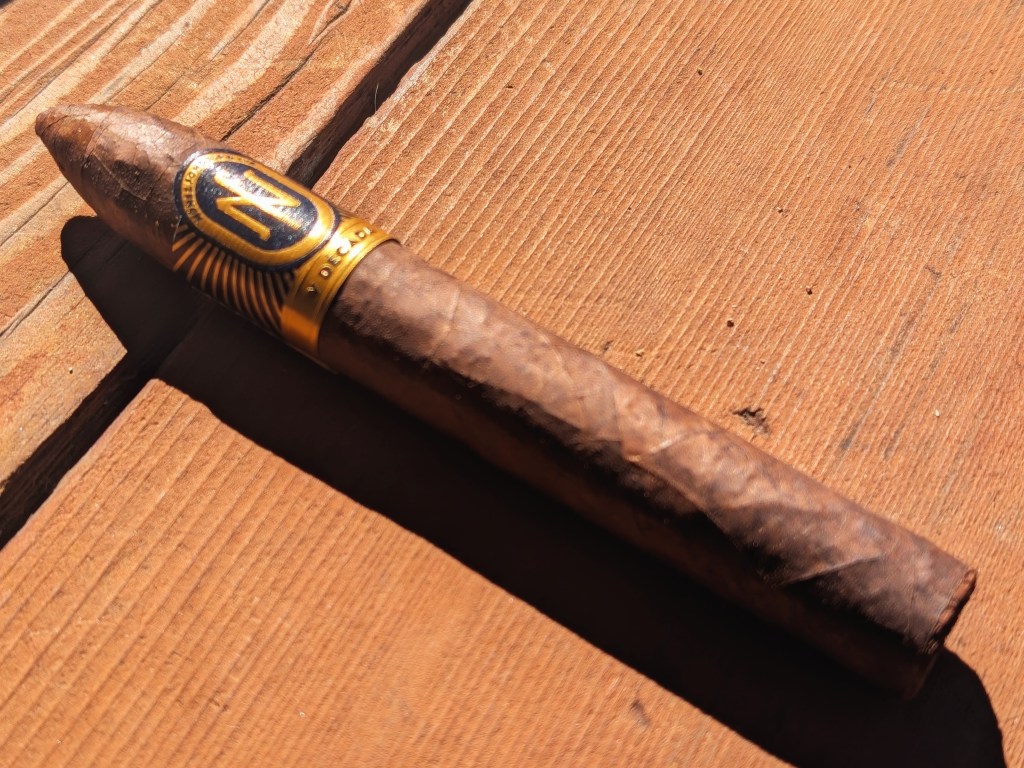
There’s an immense amount of it inside the cigar, but it behaves nothing like the atomic energy of the NF Cigars V Década Torpedo. The energy of that cigar was bright and overt. Chef Rick draws me inward toward a warm, comforting light.
There’s something nurturing about it. The flavors are full, the body is rich, and the underlying power is obvious, yet the cigar places me in an almost contemplative state. Then I notice that the strength has quietly moved just beyond medium. The nicotine has been building beneath the gentleness without disturbing it. I’m not euphoric, but I’m certainly mellow.
At halfway, the reverie begins to break.
A gorgeous wave of roasted chestnut rolls through the profile. Then everything brightens and blooms into lemon curd sprinkled with lemon zest.
Hello!
The spice gathers across the top and sides of my tongue as an uncanny fruitcake note emerges. It’s a wake-up call, but the cigar doesn’t lose its composure. The body remains thick and silky-smooth, while strength holds barely above medium.
And once again, the cigar feels Cuban. I should be sitting on a seawall somewhere in the Caribbean, sipping a mojito while I smoke this.
Coffee still hasn’t stepped forward. With all those Nicaraguan guts, I expected it to take charge by now. Instead, it’s part of the supporting cast, sitting behind the bread, cream, cedar, and baking spices. This is the mind-fuckery of Raymond Pages at work. You expect a fastball or maybe a breaker, and he throws a fucking knuckleball.
Coffee cake. Cinnamon roll. Raisin Danish. C’mon!
The bakery goods hit like a cannon shot and blow apart the contemplative calm of the first half. The energy that had been drawing me gently inward is suddenly overt, and the profile becomes charged with movement.
Coffee finally pushes forward, but cream and nutmeg strip away its bitterness before it can dominate. Then a gorgeous, thick matcha green tea appears with a touch of honey.
The complexity has been accumulating so quietly that I don’t recognize its scale until the cigar detonates. Before the bakery goods arrived, flavors had been collected one at a time. There were twists and turns, but they never disturbed the smooth glide of the experience. Now the flavors are dancing around my mouth, and the profile is abuzz with activity.
There’s a tremendous amount happening, but nothing loses definition. No sharp edges develop. The cigar remains balanced, harmonious, and completely composed.
Coffee becomes more assertive as I move into the final third, and dark chocolate makes a sudden appearance. Black pepper follows. The cedar, which has remained fresh and fragrant throughout the cigar, begins to char.
It feels like a declaration: I may have dressed the part of a Cuban, but I’m Nicaraguan to the core. Don’t forget that.
Strength is flirting with medium-plus now, while the body sits just short of full. Spice races randomly across my tongue, touching down in one place before moving somewhere else.
The flavors are coming at me in waves now. I can barely identify the individual pieces and combinations, so I’m not even going to try.
It’s transition city.
But despite the buzz of activity, I can sense a central theme: cedar, black tea, and that light caraway. They aren’t the core, but they’re constant. It feels like they sit on top of the core while the rest of the flavors gather about them.
By the last couple of inches, the Cuban dress has been pulled away and the cigar is unmistakably Nicaraguan. I get the spice of the Ometepe on my lips. The other fillers provide density and richness, while the Sumatra binder contributes a dark and comforting fruitiness.
Comforting may be the best single word for the entire experience.
The first half felt nurturing, pulling me toward that gentle light. The second half is far more energetic, but the energy never becomes threatening or overpowering. It remains warm and inviting even as the cigar grows darker, stronger, and more active.
At the last inch, the spice returns to the sides of my tongue. A residual amount remains on my lips, but most of the sensation has anchored itself inside my mouth. The waves continue with raisin Danish, nutmeg, roasted nuts, sweet black tea, and citrus moving through the profile. Strength reaches just barely medium-full, but it never gives me the sense that it’s preparing to overwhelm me.
I could keep identifying individual flavors and combinations, but you get the picture. The cigar remains complex and energetic all the way to the end.
I realize I haven’t mentioned the construction. That’s because I barely noticed it. I know there are folks who obsess over construction and burn lines, but in this case, the experience was so enveloping that I didn’t really pay attention to it.
Sure, I made a couple of corrections because I was sitting outside with a light breeze, and I relit it once while I was writing notes. Other reviewers might dock points for that, but to me, they were completely irrelevant. Besides, little corrections and occasional relights are simply a fact of life. If you want perfection, you’re in the wrong hobby.
I’ve said it before. The more cigars I smoke from Raymond Pages, the more respect I have for his blending skill.
Rick Rodriguez established the concept and retained final say, but once the project reached the blending table, Raymond Pages drove it. He took a blend that suggests structure, power, and familiar Nicaraguan boldness, then gave it restraint, gentleness, and a Cuban-like composure before finally allowing its Nicaraguan identity to break through.
I don’t know whether Rick asked for that Cuban-like experience, but Raymond clearly had a vision for where to take the cigar.
The intent is unmistakable.
You can buy these at Cigar Page. The standard price of $56.83 for a fiver is totally worth it, but if you’re a Page Plus member, the price is $41.90 for a fiver, but only $383.31 for a 50ct cabinet. Holy shit! Katman frequently admonishes people to get the membership. I couldn’t think of a better time to join.




Leave a comment