
Wrapper: Ecuadorian Connecticut-seed / Ecuador: Cajuaca
Binder: Nicaragua
Filler: Nicaragua: includes Vanguard Aegis hybrid tobacco
Size: Toro Extra (6 x 52)
Strength: Mild-Plus → Medium-Plus (nub)
Body: Medium-Plus → Full (last inch)
Price: $10.70–$12.79 per cigar; $224.99–$249.80 per box of 20
Factory: Tabacalera Familia Disla S.A., Nicaragua
Blender: Daniel Lance, Esteban Disla / Domain Cigars
Release: April 2026 announcement; shipping May 2026 (Regular Production)
Smoking Time: 1:45
Experience Rating: 97
Back in the ’90s, I attended several self-help seminars. Many people might have scorned them at the time, but they helped me immensely, giving me great communication and human interaction tools. They also helped me gain a better sense of who I was and what was important to me.
In one of the seminars, Chris, the seminar leader, asked the group a simple question: What is integrity?
Lots of people blurted out answers, including me.
Chris just nodded and smiled, then popped a transparency on the projector. Yeah, I’m dating myself. It was a picture of Lucy from Peanuts yelling, “I say what I mean, I mean what I say.”
After a brief pause to let everyone absorb it, Chris simply said, “Integrity is simply this: Your word is your bond. You’ll do something or act a certain way because you said you would.”
Integrity.
That’s how I view Domain Cigars. For each of their blends, Daniel records a video describing the intent he and Esteban Disla had behind it. And in my experience with their cigars, each one has lived up to its stated intent.
The Attenuation is no exception.
Synopsis
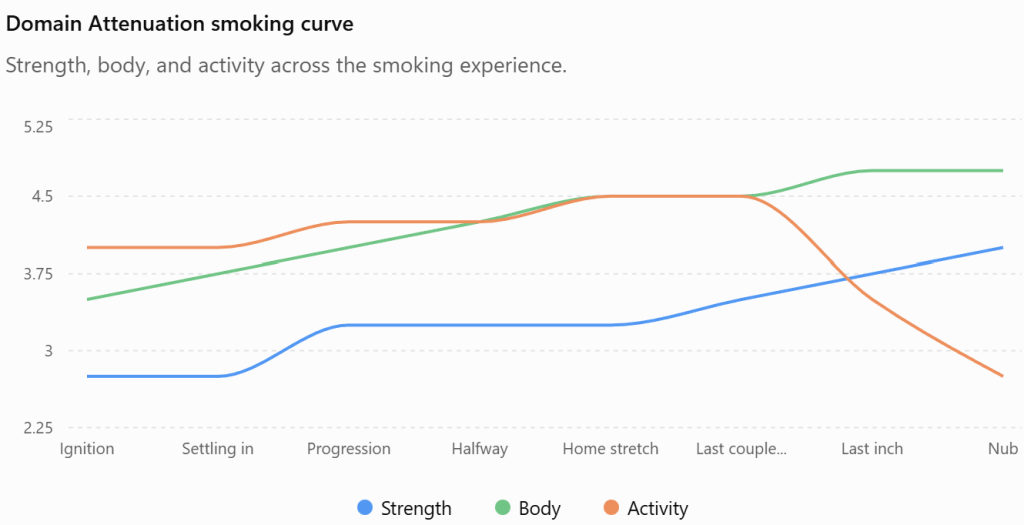
Strength begins below medium, holds steady through the early smoke, then rises gradually from progression to the nub, finishing at medium-plus without ever becoming heavy. Body starts ahead of strength and builds almost continuously, reaching full late, while the profile remains open rather than dense. Activity is high from ignition, climbs through the home stretch and last couple of inches as the cigar becomes more expansive, then drops in the final inch and nub as movement slows and the cigar settles into a firmer end state.
In his Attenuation video, Daniel Lance describes it as “clarity and energy without heaviness.” But he also mentions that Domain is known for making bold cigars. That intrigued me, and I immediately wondered, “Are they going to make a Connecticut-wrapped cigar with balls?”
Let’s find out.
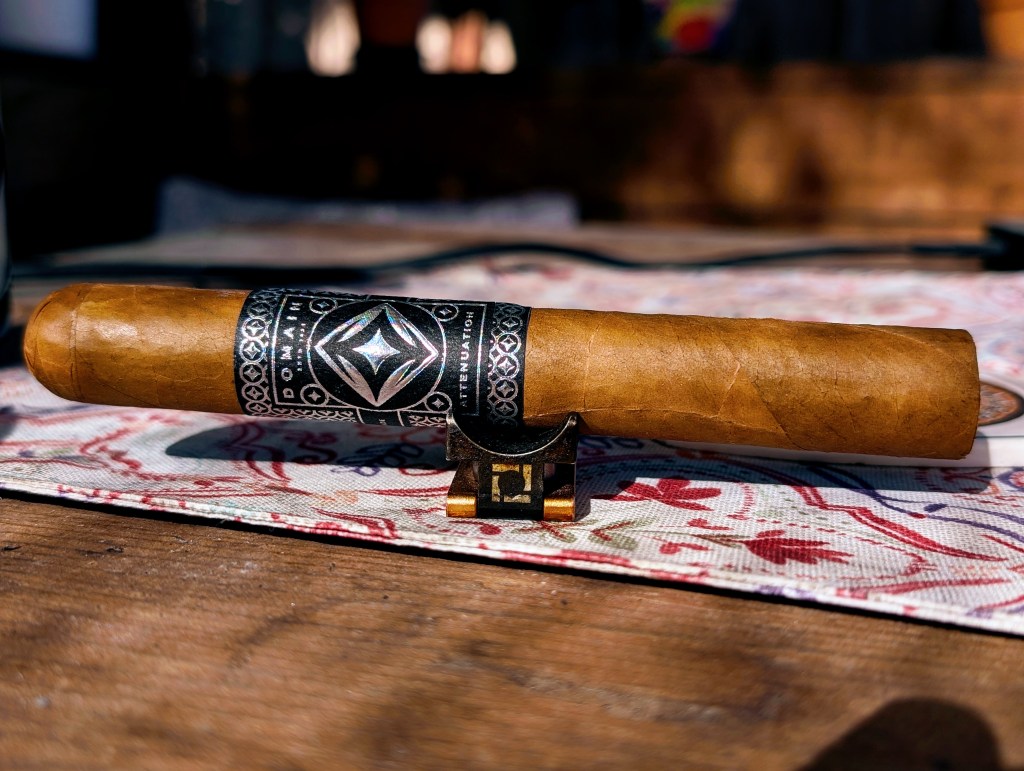
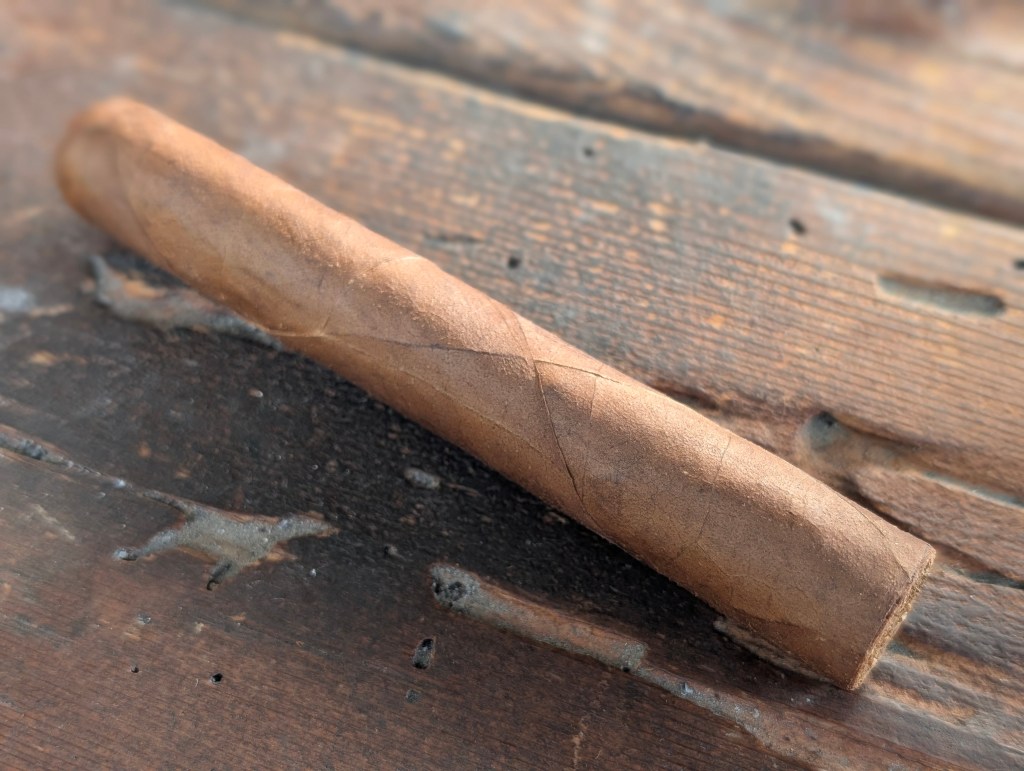
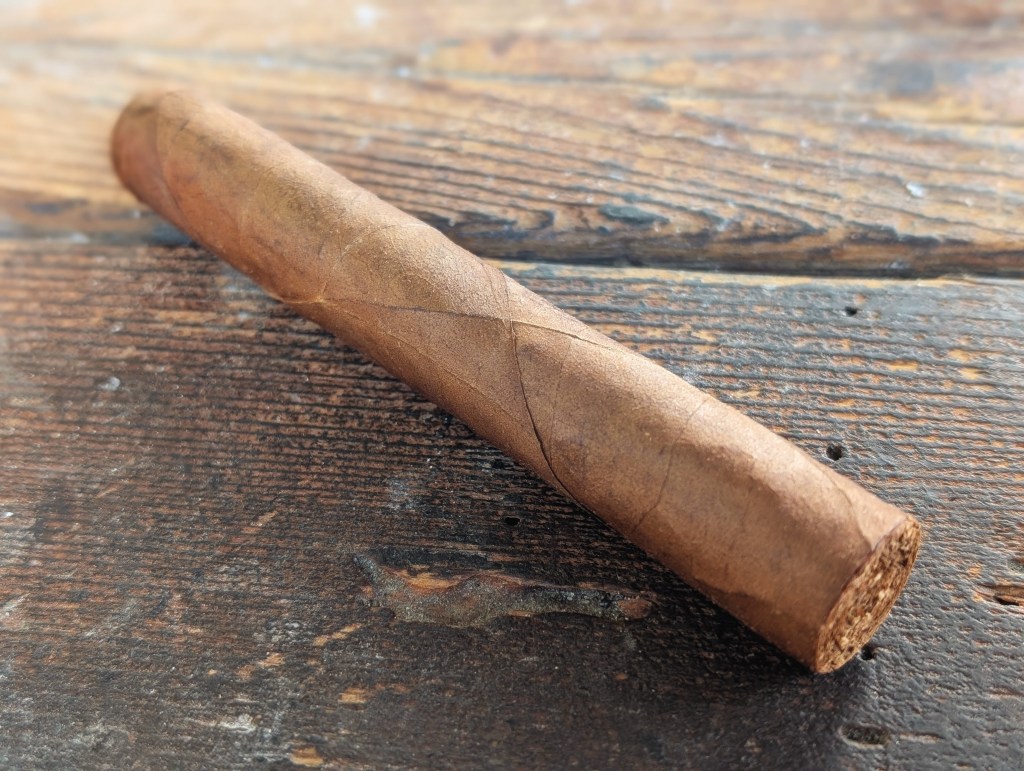
The Attenuation feels substantial in the hand. The roll is smooth, hefty, tightly packed, and shows very few veins. The prismatic logo on the outer band is also ultra-cool, catching the light in a way that fits the name. The wrapper gives off hay, dry grass, cedar, and a faint fruity sweetness. The foot is much richer: dried fruit, honeysuckle, and strawberry preserve. I could sit and smell this for a while.
The cigar stands up right away. Cedar arrives first, followed by caramel, hazelnut, orange peel, lemony citrus, and a run of baking spices: nutmeg, cardamom, and clove.
I know it’s a Connie. It starts bright, and there’s definitely Connecticut character in the profile. But it doesn’t smoke like a normal Connecticut. A few puffs in, it reminds me more of a light Habano: sarsaparilla, light coffee with cream, white chocolate, and an ambient spice that enters without bringing heat.
There’s immediate energy here. Not strength exactly. The cigar is still sitting below medium in strength, with medium-plus body, but the activity is already high. It feels awake from the start.
As the Attenuation settles in, a base begins to form. Charred cedar sits at the center, coffee follows it, and cream wraps around both. That becomes the anchor, giving the cigar a little more body without making it heavier.
Around that base, other flavors start taking turns standing up: nougat, vanilla, baking spices, green peppercorn. Cardamom is present, the clove is light, and cinnamon and mace begin to work around the edges. That’s where the activity is coming from. The movement is a little random, almost like Whack-a-Mole, though not nearly as frenetic as the Southern Draw Manzanita.
What’s impressive is how articulate it remains. Strength is still sitting just below medium, so the cigar has presence without pressure. Everything is present and easy to identify, even while the flavors keep standing up and sitting back down around the core.
As the cigar progresses, I start feeling a lot of potential energy stored inside the cigar. It feels like it’s right on the verge of going kinetic, and that rising activity shows up first in the spice. It begins moving back and forth from the front of my mouth to the mid-palate, where it settles into the finish.
There’s also an implicit background sweetness. It isn’t obvious, but it’s there, and it continues playing against the spice. On the retrohale, it becomes much more apparent.
The Attenuation has Connie brightness, but there’s weight in the smoke now. The core wants to pull the profile darker, but the brightness prevents it. Orange peel, lemony citrus, and that background sweetness keep lifting the profile, creating a lot of tension and energy. A distinctive Sichuan peppercorn note emerges, the citrus comes forward, the cream thickens, and the cedar intensifies. The body is building here, but instead of adding density, it gives the cigar more definition.
This is still smoking more like a Habano than a normal Connecticut. The flue-cured Connie wrapper has been transformed. There’s none of that Connecticut harshness or bite, and the implied sweetness feels like part of the curing process. Genius move.
The cigar is complex in two ways now: flavor and movement. There’s a lot going on, but it stays organized and structured. Nothing feels out of place. If anything, the pieces feel inevitable.
The nicotine is sneaky. Strength steps up as it begins creeping in, but it remains stimulating rather than heavy. Even as strength and body increase, they don’t compress the profile. They make it clearer.
At halfway, I ask myself: What are they attenuating?
They’re attenuating the negative Connie traits. The cigar still tastes very Connie-forward, but the sharp edges have been stripped away. There’s minimal spice, which means minimal tactile heat, and there’s zero harshness. Strength has stepped up from the opening, but it isn’t pushing. It’s adding energy underneath the profile without turning the smoke aggressive.
This is where the Attenuation starts moving into Davidoff territory with the smoothness. Totally refined. But there’s Nicaraguan muscle underneath, and the body keeps building around that core. It’s like the cigar is saying, “Don’t you dare mistake me for a smooth Dominican.”
If a Davidoff is a gentleman in a Savile Row bespoke suit, this cigar is the same well-mannered gentleman wearing a custom Italian suit. Same guy, totally different look.
The Whack-a-Mole movement continues, so the activity stays high, but the cigar is not becoming scattered. The core is even more defined now. Not darker, exactly, but more clearly separated into its individual elements.
In the home stretch, a dry, flinty minerality appears, adding another point of aromatic tension. The body continues to build, but the profile feels more expansive, not heavier.
The flavors are moving freely now. The earlier Whack-a-Mole pattern is gone. It’s like enough energy has built up to break everything loose. Shortbread cookie appears, followed by buttered toast, returning nougat, and baking spices. The spice sits on top and supplies electricity, but it remains incredibly gentle.
Background sweetness asserts itself, and on the retrohale, it gives me cinnamon roll. Lemony citrus joins the spice, and together with the sweetness, it counteracts any compression. Activity reaches its highest point here because the cigar is moving freely, but it’s still articulate. Nothing is colliding.
In the last couple of inches, the coffee darkens into strong black coffee, not quite espresso, while cedar continues to lead. The cream doesn’t really change. It’s just there, holding the middle together.
There’s a darkening now, but no real change in weight. The body remains full, yet the cigar still doesn’t feel dense. Citrus floats on top, not strong, but enough to create another tension point and keep lifting the profile. Sweetness is also more visible now. Still in the background, but much easier to see, and it adds another point of clarity.
Spice finally starts asserting itself, and the activity picks up with it. It’s like a conductor signaling the engineer to speed things up. The flavors seem to move a little faster, helped by a small amount of compression, but the cigar still refuses to get heavy.
This also strikes me as a great daytime smoke. I normally don’t assign cigars time slots, but the energy here feels perfect for morning or afternoon. I’m smoking it after dinner, but it isn’t relaxing me into the chair. It’s keeping me alert. The nicotine is at the right level to stimulate without turning sedative.
In the last inch, cedar still leads, but the coffee gets darker. It adds a pleasing bitter bite to the finish and starts to taste like espresso without adding its weight.
The spice is pulsing now, but the overall movement begins to slow. The engine is still running. I can feel it. The base remains firm, and the body pushes toward full, but the cigar keeps its shape.
The profile has turned dark, but only in flavor, not in strength. Cedar is charred, coffee is espresso, cream thickens, and the sweetness turns toward burnt sugar. Even with that darker turn, the cigar stays energetic.
Then it takes a savory turn: soy sauce umami, light saltiness, and charcoal briquettes. Spice slightly recedes, activity drops, and the cigar settles into a slower, darker rhythm without collapsing.
At the nub, there’s very little movement left. Activity has dropped considerably, but the core is still intact and as articulate as ever.
The profile is more savory than sweet, though the sweetness has become more pronounced and now leads. Spice moves to the tip of my tongue and lips, still moderate, while strength reaches its highest point and body remains full.
Even here, there’s no collapse and no density problem. The cigar has slowed down, but it refuses to fall apart.
The Attenuation leaves me feeling alive.
Even at the end, when the profile turns darker and slightly savory, it never broods. There’s no collapse, no increase in density, and very little compression. The body thickens through the smoke, but it never becomes heavy or gravitational.
What stays with me is how open the cigar remains. Spacious, really. No collisions. Just clear articulation of the flavors all the way through. And even though it often smokes like a Habano, there’s still plenty of Connie character in the brightness, citrus, and gentle spice.
Daniel described the Attenuation as “clarity and energy without heaviness.”
That’s exactly what it delivers, down to the nub.
As for my earlier question about whether this is a Connie with balls, the answer depends on what I mean by balls. If I’m talking about body, structure, and presence, absolutely. If I’m talking about brute strength, not really, and that’s a good thing. The Attenuation doesn’t need to overpower the smoker to prove its point. Daniel and Esteban built this cigar around clarity, energy, and controlled force, and that’s exactly what shows up in the smoke.





Leave a comment