
Wrapper: Ecuadorian Connecticut Shade
Binder: Nicaraguan
Filler: Five-year-aged Pennsylvania Broadleaf and Nicaraguan tobaccos
Size: Toro Deluxe Tubo (6 x 52)
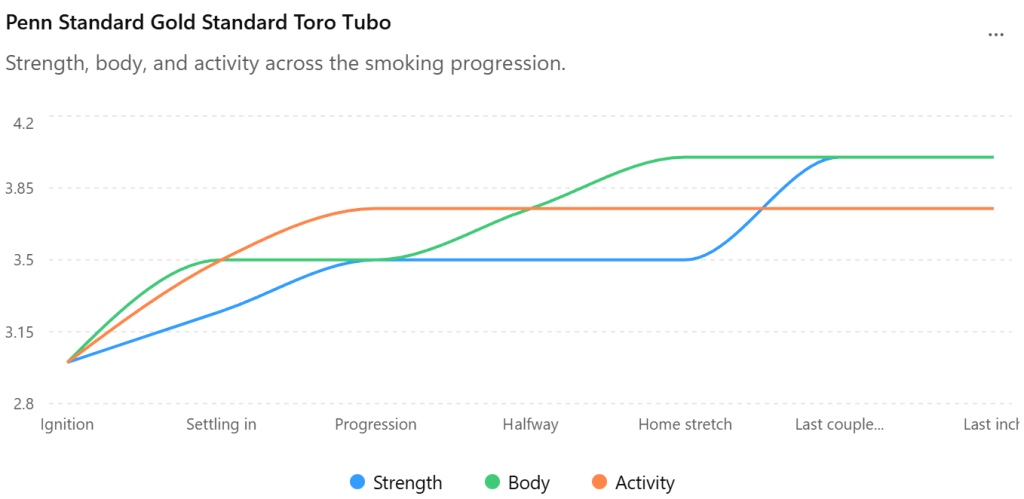
Strength: Medium → Medium-Plus (last couple of inches)
Body: Medium → Full (home stretch)
Price: $99.99 for 20 cigars ($5.00 per cigar), United States, USD
Factory: Tabacalera Pages, Nicaragua
Blender: Raymond Pages
Release: Not publicly disclosed
Smoking Time: 1:15
Experience Rating: 90
I didn’t expect to like this cigar.
It’s yet another Cigar Page house blend, and I went in assuming it would be inferior. But as I’ve found with Your Mom, Megilla Miami, and the Scratch Blends Retrohale #1, I keep eating my words. These aren’t just good, inexpensive cigars. They’re good cigars that happen to be inexpensive.
There’s a difference.
In Cigar Page’s case, these aren’t kick-around cigars. Their irreverent presentation, with the monkey imagery and fake toxic masculinity, can make them difficult to take seriously. But the cigars tell a different story. Cigar Page is serious about what it’s producing. I may not like every blend, but I respect what they’re doing.
Which brings me to the Penn Standard Gold Standard.
I smoked the original Penn Standard twice and didn’t like it, so you won’t see a review of that cigar. The Gold Standard, though, is a completely different animal. Despite the reservations I carried over from the original, I ended up liking it.
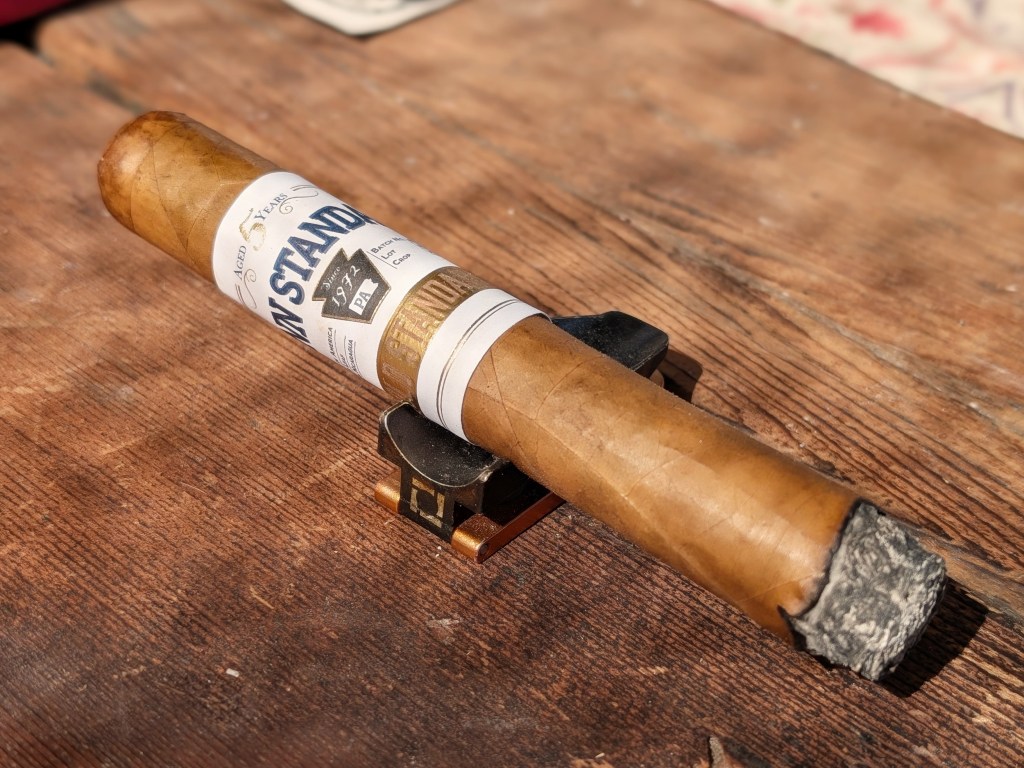
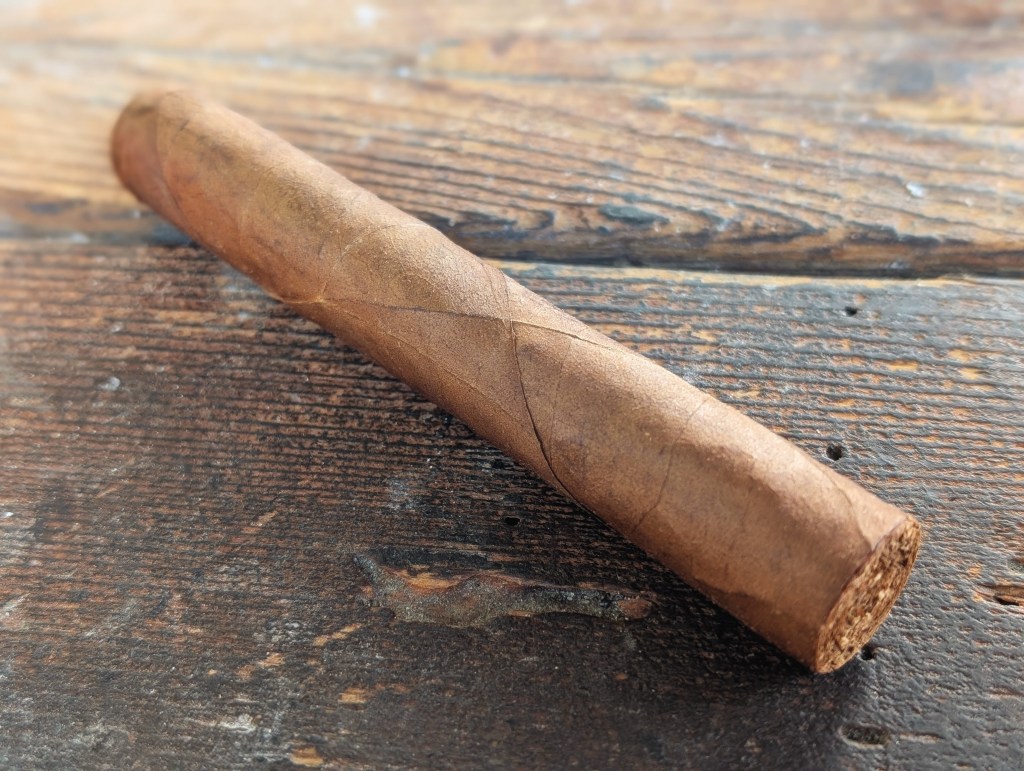
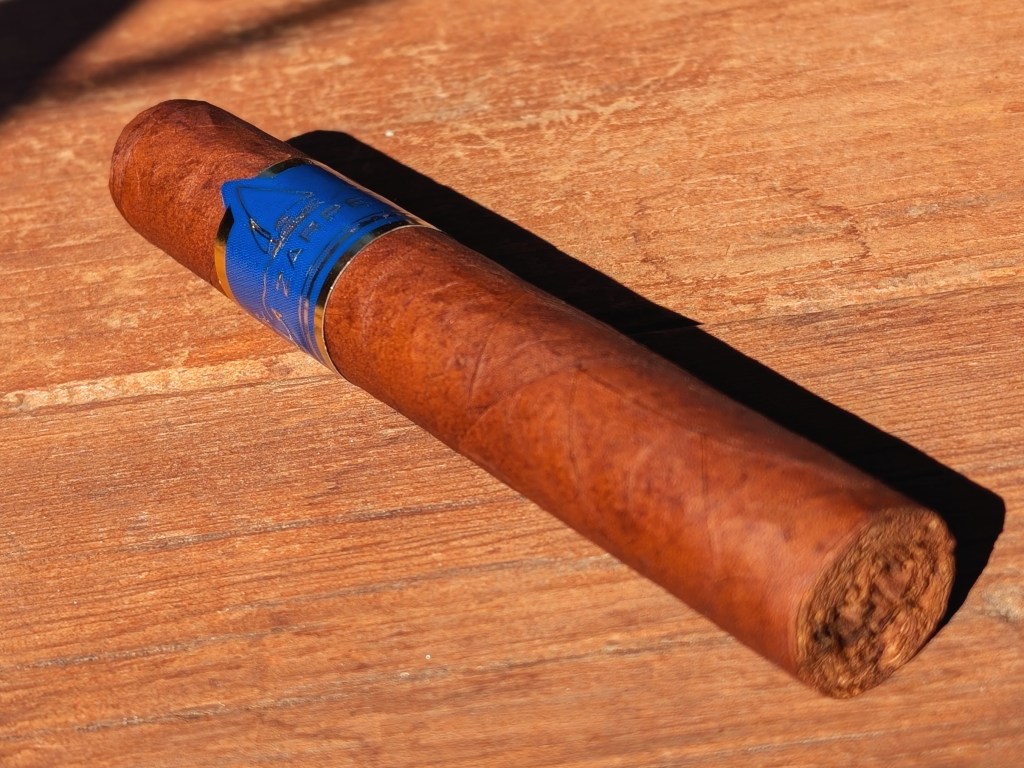
The Gold Standard is a good-looking cigar. The wrapper is smooth with an oily sheen, and the cigar has some heft. It’s tightly packed, and Pages clearly didn’t skimp on tobacco. The wrapper and foot aromas don’t reveal much beyond hay, tobacco, and a little barnyard. The cold draw is bready, floral, and slightly sweet.
With my first puff, the cigar makes itself known immediately with gorgeous cedar and coffee with cream. Ginger, nutmeg, earth, and a citrus quality follow. Body and strength are an immediate medium, and I’m surprised by the early activity.
As it settles in, yeasty bread and baking spices arrive, resplendent with nutmeg, cardamom, cinnamon, and anise. Charred cedar and coffee move to the base of the profile, seeming to anchor it. There’s not even a hint of Connie bitterness or bite.
Spice arrives and pulls upward on the profile. Lemon and orange peel appear next, followed by orange marmalade. I shake my head in disbelief as the citrus gives the profile an emotional lift.
There’s an inherent composure and refinement to the smoke, but it also feels muscular, with strength ticking up just past medium and body inching towards medium-plus. It isn’t aggressive, but I can feel a restrained power that’s lurking beneath the surface.
Despite the overall brightness of the profile, it seems to me that the PA Broadleaf may be adding that underlying muscle to balance it out. It gives the profile solidity and mass without weighing it down.
Further in, cream enters and settles with the coffee and cedar. Gentle waves of flavor follow: fruity sweetness, white chocolate, honeycomb, dulce de leche, and charred oak. Spice asserts itself and moves to the front of the profile.
At this point, there’s no fixed center, and I’m okay with that. There’s not much movement, and that’s also okay. The cigar is on a smooth glide, even as it continues accumulating flavors. It’s far more enjoyable than I originally thought it would be.
It may not be a cigar I’d actively seek out, but for a pleasant smoke to simply sit with, it works.
At the halfway point, I remove the big, thick band, and the wrapper cracks as if it had been holding it together. This has happened with all three cigars I’ve smoked, and it isn’t a humidity problem. My humidor is stable at 65% rH, so this is a construction flaw. It doesn’t affect the smoke, even with the review cigar, but I have to handle it gently.
Cedar steps forward in the core and now leads the profile. The Connie personality reveals itself, but it’s kept in check by the mass of the Broadleaf. Baking spices return in little spikes: clove, cinnamon, cardamom, nutmeg, and anise.
That wonderful orange peel returns, accompanied by little dots of orange pulp. It’s delicious. Strength ticks up just past medium, while body creeps toward medium-plus. Activity is pegged just short of medium-plus. It’s still a smooth glide.
As I hit the home stretch, the profile takes on a darker tone with dark caramel, charred cedar, charred oak, tannins, and leather. Strength remains unchanged, which is uncanny to me, but the spice prevents the darker turn from gaining mass. Orange peel lingers on the finish, especially on the retrohale, and the yeasty bread reappears.
The cigar has spent a long time developing flavors. They don’t move or cycle. They’re simply present. When they reappear, they step forward. The action reminds me of a game of duck-duck-goose.
It’s actually pretty cool.
The body begins to thicken with no change in strength, and I think again about how little I expected to like this cigar because of the original Penn Standard. But I’m really enjoying it.
In the last couple of inches, the PA Broadleaf starts to show its character. The profile isn’t aggressive, but it carries an implicit power and provides the structure that keeps it from becoming chaotic. It’s like a hall monitor controlling traffic and policing the boundaries to keep everyone inside.
The spice begins to really assert itself, and combined with the Broadleaf’s muscle, pushes strength up to medium-plus. I’m really appreciating that orange peel on the finish. It provides an emotional lift I like to see in a cigar.
In the last inch, the profile darkens again. Coffee moves to espresso, while the cedar is now fully charred and still leading. The orange peel becomes more pronounced and darker. Baking spices return, but now they’re toasted. The anise takes on an ouzo-like quality, adding to the spice.
Looking back on the progression, there’s been plenty of bright Connie character, but not a bit of harshness. The PA Broadleaf has done its job as a foil to that brightness, while the orange peel has created a welcome lift throughout the smoke. Even as the strength increases at the end, the profile never collapses or becomes dense.
Despite the cracked wrapper, the cigar continues to smoke properly and never falls apart. It remains enjoyable, and I’m judging it on its merits, but the recurring construction flaw still needs to be pointed out.
You can buy this from Cigar Page. It’s a good anytime cigar, and I could recommend it based on its profile alone. But the cracking wrapper requires a warning.





Leave a comment