
Wrapper: Not documented
Binder: Not documented
Filler: Not documented
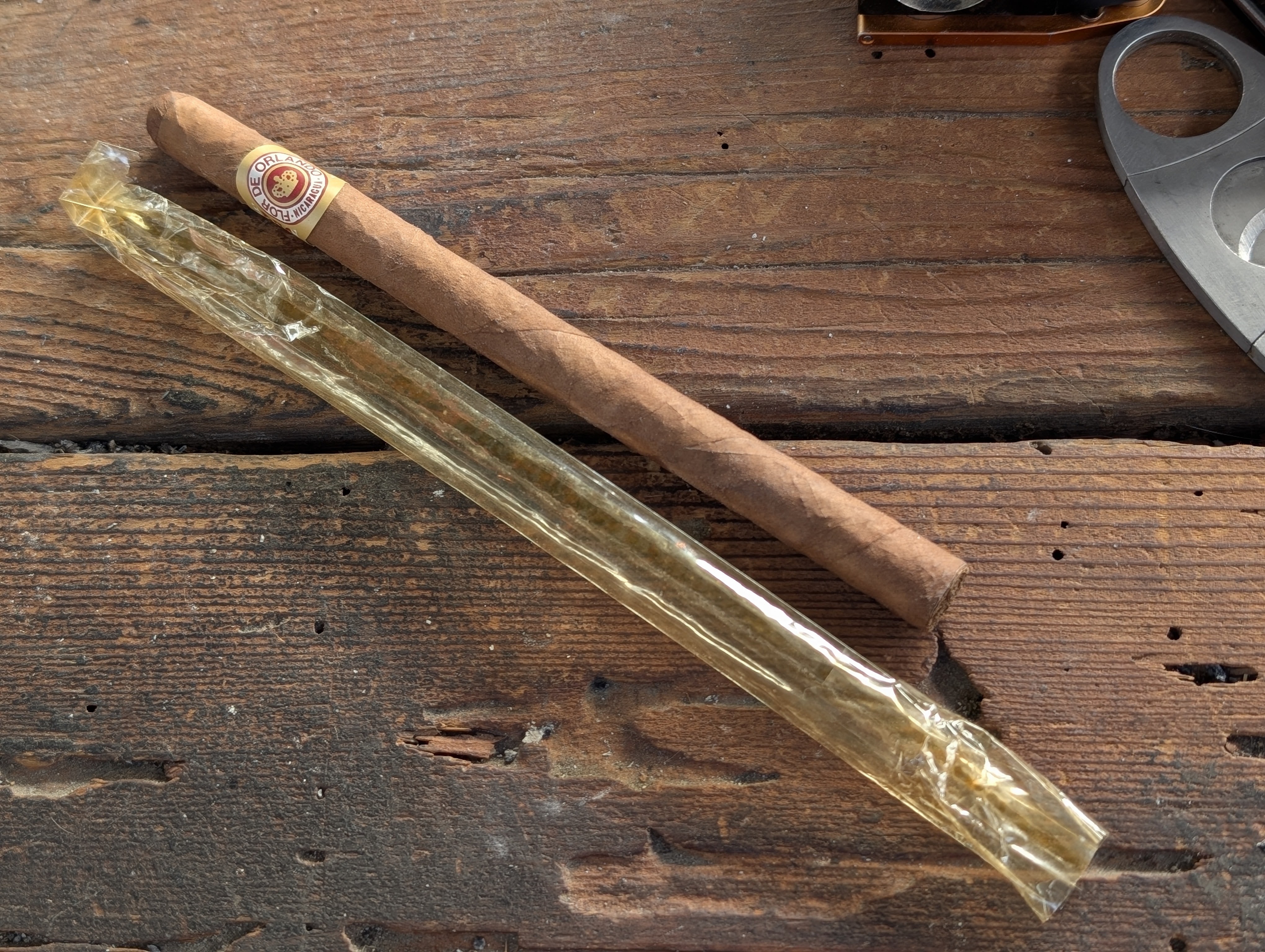
Size: Panatela Extra (7 × 36)
Strength: Medium → Medium-Plus (second half)
Body: Medium → Medium-Plus (second half)
Price: $35.00 per cigar, purchased at Bay Briar Shoppe, Soquel, CA
Factory: Fuente factory, Estelí, Nicaragua
Blender: Likely Carlos Fuente, Sr.
Release: 1966 (non-Cuban version); reviewed specimen from the mid-1970s
Smoking Time: 50 minutes
Experience Rating: Unrated (vintage specimen)


Notice that the wrapper, binder, and filler aren’t documented in the stats block. That’s not an omission. Manufacturers didn’t routinely publish full blend breakdowns at the time. In researching this, I found that people related to cigars differently then. Cigars were much more of a commodity item. As with cigarettes, people smoked what they liked. It wasn’t until publications like Cigar Aficionado started publishing blend stats that those details became a regular part of the conversation.
I was scrolling through my Reddit feed when I came across a post from someone smoking a cigar from the 1940s. He’d purchased it at Bay Briar Shoppe in Soquel, California, and mentioned that the shop had a substantial selection of vintage cigars. Soquel is only about forty-five minutes from my house.
That was all the encouragement I needed. I went there the next day.
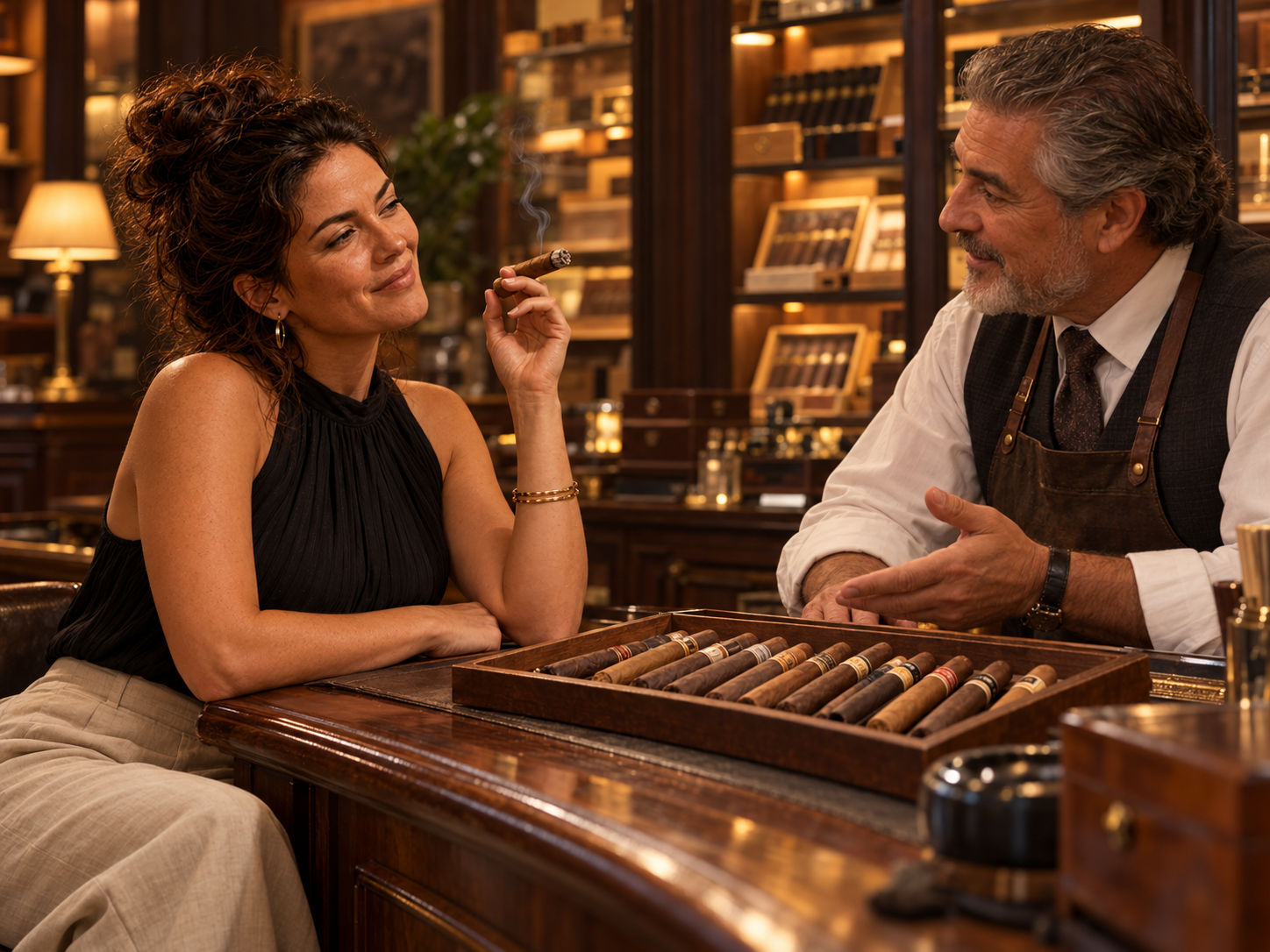
I spent a long time in their humidor. The selection was diverse, with plenty of pre-embargo cigars and even some from the 1890s, though those looked a little rough. My eyes eventually fell on a box of Flor de Orlando. The shop’s label said “1962,” the year I was born, so I decided to buy one.
When I got home and started researching it, I discovered that the Panatela Extra I’d purchased came from the mid-1970s. I didn’t care. What I was holding in my hand was still a bit of cigar history.
The Flor de Orlando was a Fuente brand dating to the early 1960s. Fuente identifies its 1966 release as the company’s first handmade cigar made without Cuban tobacco, part of Carlos Fuente Sr.’s efforts to develop blends as the family’s remaining Cuban leaf ran out.
During the 1970s, Carlos produced the Flor de Orlando at the family’s factory in Estelí, Nicaragua. That operation ended when the factory was destroyed during the revolution in 1978. After another factory loss in Honduras, Carlos and his son Carlito established their Dominican operation in 1980. The Panatela Extra I brought home comes from that earlier Nicaraguan period, placing it in a chapter of Fuente history that ended nearly fifty years ago.
For a cigar of that age, it’s in remarkable shape. The wrapper has a rustic, toothy surface, and the cigar is amazingly firm. Both the wrapper and foot smell of vanilla and animal crackers. The draw is a little snug but workable, carrying clove and black licorice.
My first thought at light-up is immediate: This is Nicaraguan tobacco. Coffee, cedar, and black pepper arrive in a blast, forming a clearly defined core within the first three puffs. There’s nothing soft or faded about the profile. These cigars must have been lovingly cared for before the owner of Bay Briar Shoppe purchased them.
I hadn’t planned to apply my evaluation framework to this smoke, let alone do a full review. Other vintage cigars I’ve smoked have been soft and muted; more historical curiosities than anything else. But with the immediate strength and structure I experienced in the first few puffs, I think it’ll hold up to closer scrutiny.
Through the first inch, the cigar is simply tasty. Nicotine begins to register, bringing the strength a little above medium, while the body settles at medium. The core is clear, and I’m getting far more expression than I expected.
Things move quickly with a 7 × 36. This wasn’t meant to be a long smoke, and as I get farther into the first half, I find myself repeating that first thought. This is Nicaraguan tobacco, and it’s delicious. I feel as if I’m smoking a modern Nicaraguan cigar.
The coffee, cedar, and pepper give the profile a dark foundation. Above it, a diverse secondary layer moves among nutmeg, clove, cinnamon, and cardamom, with vanilla, caramel, and malt also in the mix. Dark cacao bean persists through the finish. Although that’s where I initially notice it, its persistence makes it feel connected to the core.
I’m chuckling at the clarity of the flavors I’m getting. I expected muted flavors, a loose draw, and a hot burn. The Flor de Orlando has none of that. The flavors are pronounced and clear, and the spice is light but bounces all over my mouth. That combination tells me someone has taken loving care of these cigars.
I’ve smoked vintage cigars that were completely depleted. Their profiles had faded to cardboard, and all I got was heat. Here, the flavors retain their definition, and the spice is active after roughly fifty years. This thing is still alive and kicking!

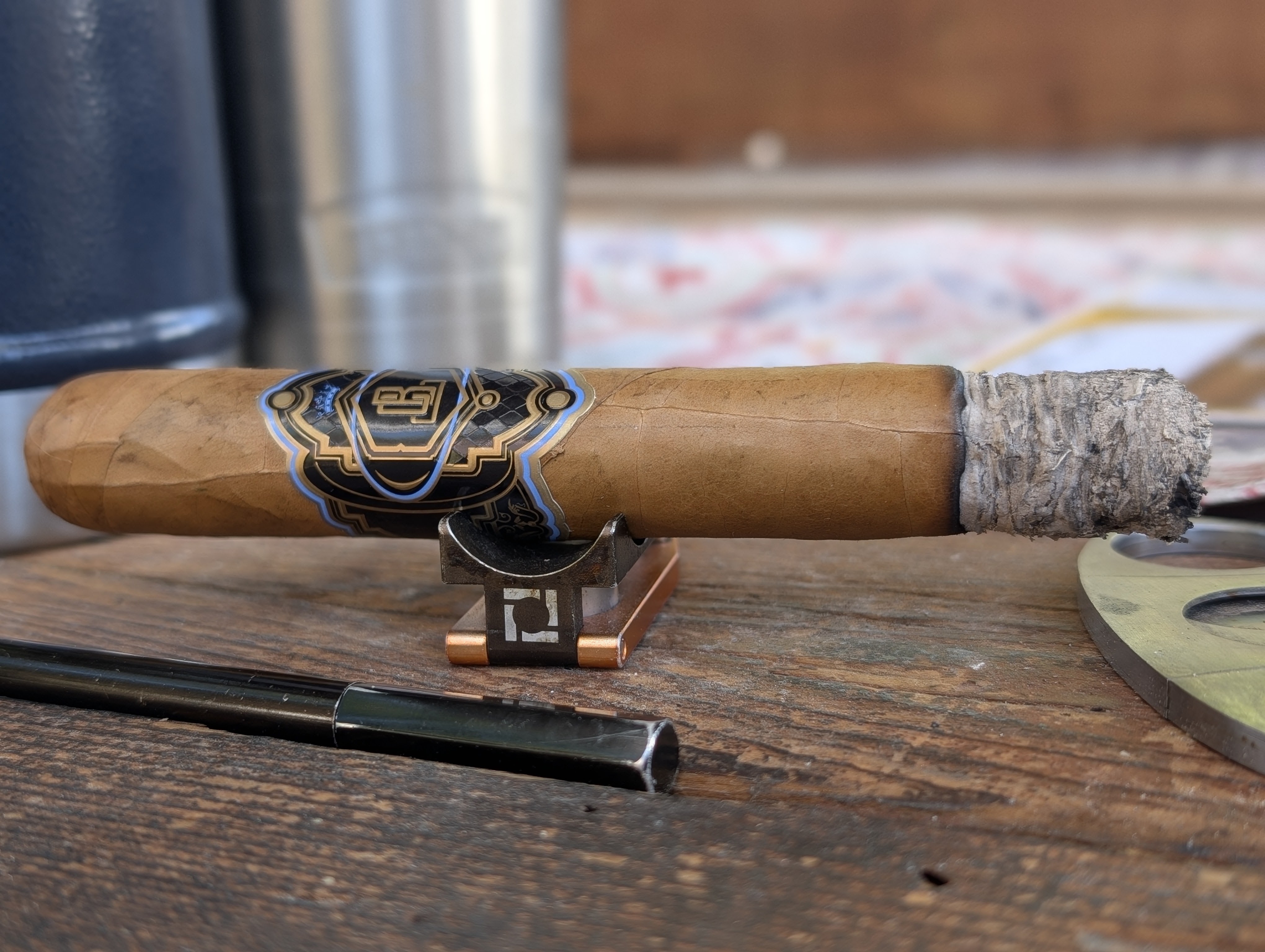
And look at that burn line. I lit the cigar and haven’t made a single touch-up. It was obviously well rolled, but the leaves are also burning evenly together. The humidity is balanced throughout the cigar, another sign of excellent storage conditions. Along with the clear flavors and active spice, that even burn reinforces how well this cigar has been cared for.
Approaching halfway, the coffee asserts itself and brings the core farther forward. The cacao bean’s position also becomes clear. It’s now firmly part of the core, extending beyond its earlier presence on the finish. Strength remains a little above medium, with no additional nicotine buildup. The body has thickened slightly and is now just over medium as well.
Dried prune and raisins enter the secondary layer as I move into the second half. A light retrohale brings the raisins into sharper focus. There are enough flavors here to call the cigar complex on that basis alone, but what interests me most is their movement.
The secondary flavors remind me of kids in a bounce house. They’re moving all over the place, yet the walls keep them contained. The profile retains a tremendous amount of structure, and I realize that the spice is helping define that space. It has settled into three distinct locations: my upper lip, the middle surface of my tongue, and the back of the roof of my mouth.
I’ve never experienced it breaking up quite that way before.
Farther into the second half, honey sweetness enters and lingers through the finish. Buttered sweet bread follows almost immediately, while the raisins and dried prune circle back on the retrohale. Nicotine begins to increase, moving the strength to medium-plus. The body follows, becoming thick, luscious, and chewy.
With a couple of inches remaining, the spice gathers onto my tongue and intensifies, coating its surface. It’s pronounced now, though never overpowering. Above the core, the secondary layer has the harmony of a symphony. Different flavors step forward like instruments or sections emphasized in a concerto, their prominence changing with the passage.
When I reach the band, I remove it with a little disappointment, knowing the smoke is winding down. But I’m still thoroughly engaged. The profile shows no compression or contraction. The movement continues, and the spice expands again, reaching my lips and the roof of my mouth while maintaining that sense of space and structure.
Then pronounced vanilla and toffee step forward. I’m down to less than an inch, and this thing still manages to throw a transition at me. Nice.
I finally let the cigar burn out with about half an inch remaining. Even on my PerfecDraw, I was afraid to inhale the damn thing.
The structure, balance, and composure of the Flor de Orlando were tremendous, and the profile was absolutely delicious. I’d expected an easy cruise down nostalgia lane with this cigar. Other vintage cigars I’ve smoked were interesting without being particularly expressive.
I didn’t expect this much resolution and activity.
Perhaps that’s a testament to Carlos Fuente Sr.’s blending skill. Perhaps it also says something about how well Nicaraguan tobacco can age when cared for properly. I think it has to do with a little of both.
I realize that fifty years may have produced considerable drift from the original profile. Still, this experience leaves me thinking I would have been a bigger Fuente fan had the factory fire not forced the family to move.
Finally, considering the age of this cigar, I don’t think assigning it a rating would be fair. But if this were a modern cigar delivering this kind of profile and experience, it would easily score in the high 90s.
If you’re in the SF South Bay, Bay Briar Shoppe is located in downtown Soquel in a quaint strip mall. Even if you don’t buy any of their vintage stock, it’s fun looking at their inventory. They also carry a brand I hadn’t heard of called Don Cervantes out of the Dominican Republic. I purchased a Maduro Torpedo to try it out. If it’s good, I’ll report on it.
If I had more time, I would’ve gotten lunch and done some window shopping. It’s a nice downtown. The shop itself is eclectic, selling pipes, pipe tobacco, cigars, and… health food supplements. I joked around with one of the owners saying that I love the concept: fuck up your system with tobacco, then fix it with health food. She replied, “We’re covering all the bases!” That got a laugh out of both of us.





Leave a Reply