
Wrapper: Indonesia
Binder: Indonesia
Filler: Indonesia longfiller / Seco / Ligero
Size: Short Robusto (4 x 52 / 100 mm x 52)
Strength: Medium → Full (nub)
Body: Medium → Full (second third)
Price: $110 / box of 10 (balipremiumcigars.com)
Factory: Not specified
Founder/Creative Director: Dex Bahya-Noon
Release: 2025, regular production
Smoking Time: 1:10 — listed as 25 minutes
Experience Rating: 94
While researching material for The Seeds of the Blend, I looked at tobacco seed origins from around the world. That journey took me to Sumatra, where there was a clear fork in the road.
Sumatra seed begins in Indonesia, but in the American premium cigar market, the most familiar expression is often Ecuador Sumatra: Indonesian-origin seed grown in Ecuador and used primarily as wrapper leaf.
That got me curious about Indonesian tobacco.
That curiosity became yet another rabbit hole for me to climb into. What I discovered is that while Indonesia is tied closely to Sumatra tobacco, it has a rich and diverse history of tobacco production that goes well beyond wrapper leaf. Most of that tobacco seems to end up in the European market. In the U.S., we usually catch occasional glimpses of it being used in premium cigars as a single component.
And that led me down another rabbit hole to see if there were any Indonesian cigar companies, and that’s how I found Hound Cigars.
They aren’t available in the U.S. market yet, but Dex, Hound’s founder, is working on it. I hope he gets it worked out soon because the Hound Reserva Maduro is a great stick that I wouldn’t mind having in my rotation.
Synopsis
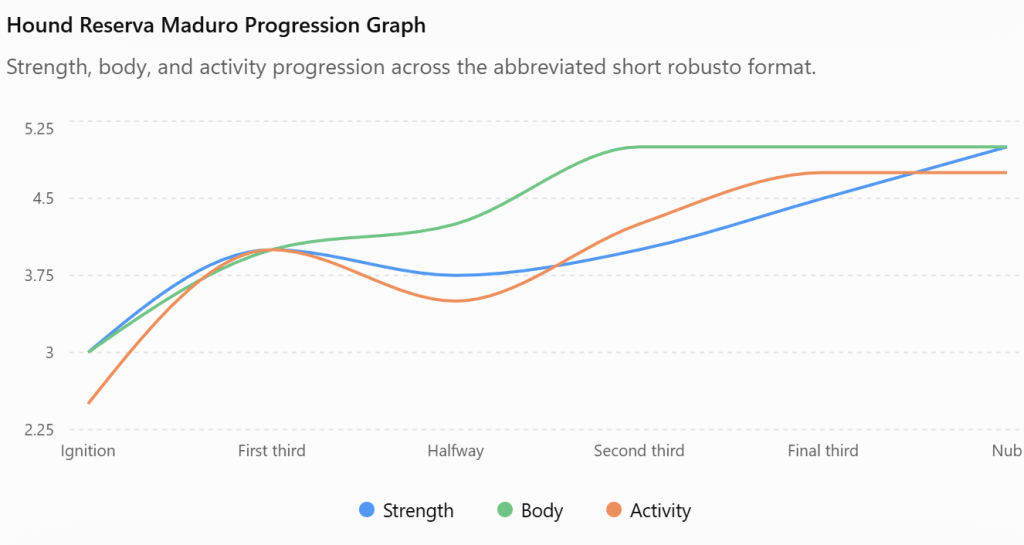
Strength opens at medium, builds quickly through the first third, briefly eases around halfway, then resumes its climb until reaching full at the nub. Body rises more decisively, moving from medium to full by the second third and holding there through the end. Activity begins modestly, expands sharply in the first third, dips slightly at halfway, then rebuilds into late-stage motion that remains just below maximum through the final third and nub.
At 4 x 52, the Hound Reserva Maduro is a little cigar. The card says 25 minutes of smoking time, and I’m a little dubious, but we’ll have to see.
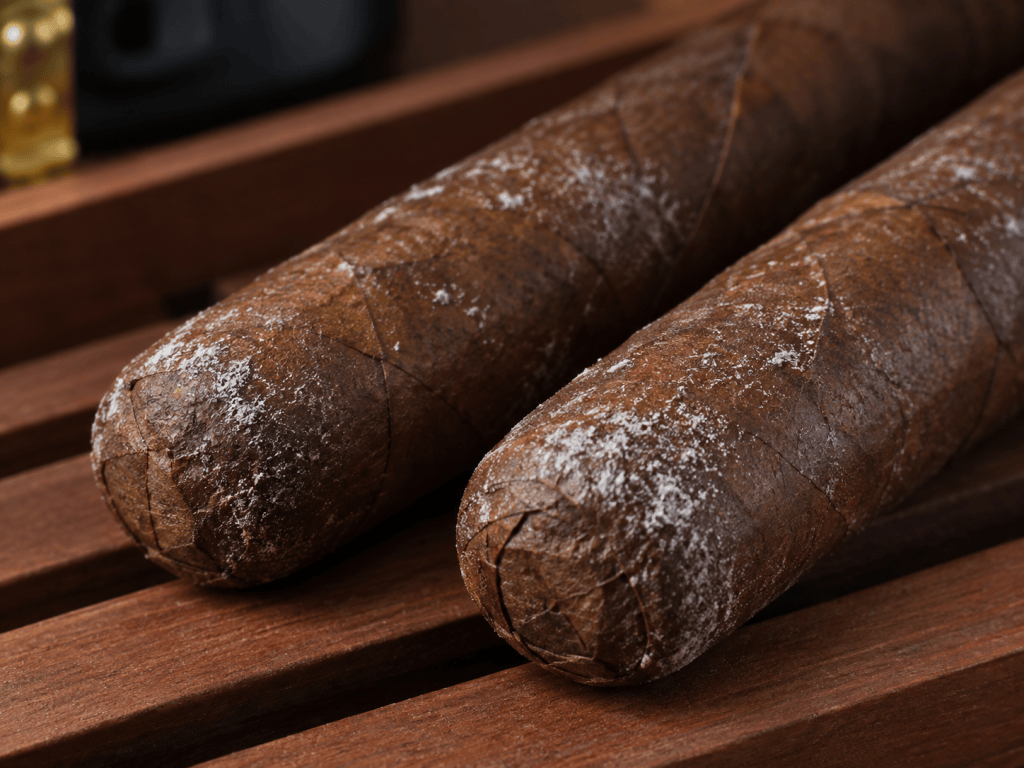
Visually, it has a rustic look. The skin is veiny and mottled. The wrapper doesn’t reveal much beyond a hint of hay and a faint sweetness, but the foot is more expressive, offering tropical flowers, oatmeal, and a fruity note.
Right from the start, this is unique.
There’s wood, but it isn’t cedar. I’ve spoken before about tasting teak in cigars, and this thing is full of it. That teak note comes forward immediately and gives the profile an exotic center of gravity. Dark, rich coffee enters with it, followed by light earth underneath.
The opening sits at medium strength and medium body, with activity just below medium. It doesn’t explode out of the gate. It establishes itself. The teak, coffee, and earth arrive early, and the cigar makes it clear that familiar players are here, but they’re speaking with a different accent.
Into the first third, the cigar settles quickly, which is good for a short stick like this. A light spice enters, then immediately moves back. It doesn’t pulse exactly. It twinkles.
Coffee, teak, and earth form the core, with the teak acting like the central pillar. That’s what gives the profile its exotic feel. The body begins thickening from medium as vanilla enters, followed by a slight hit of nicotine, then nougat. As cream moves in, the smoke gains weight, and the spice starts moving forward with a slight bump in intensity, still twinkling more than pulsing.
At this point, I can’t help thinking that even though I’m listing familiar flavors, that exotic teak wood in the center makes this unique. As a whole, it tastes nothing like a Caribbean or Central American smoke. It makes me wonder why people haven’t sourced Indonesian binder and filler more often.
The coffee begins to assert itself a little more, and the strength, which has been slowly building, pushes into medium-plus. Then the profile moves into a grain and seed transition: farro, quinoa, and oatmeal. Activity rises with it, also reaching medium-plus.
The strange part is the structure. When I’m not focusing on it, the profile feels amorphous and unstructured, almost like the components are floating around without a fixed position. But when I observe it closely, it behaves almost like the quantum observer effect, which is the idea that measuring something alters its physical state. When I focus on it, the cigar snaps into structure. That’s a very unique experience I haven’t seen before.
The second third opens with barnyard. It’s quick, but it’s there, almost as if the cigar is throwing in a discordant flavor just to ask, Are you paying attention?
Then honey arrives in a smooth, gentle wave. It’s light, but it attaches itself to the core and becomes more than just a flavor note. It becomes structural. That little wave gives the cigar a real emotional lift, and I can feel myself starting to wax poetic in my notes because of it.
Everything about this smoke is exotic and different when I zoom out. When I zoom in, I see many of the regular players. Coffee, earth, cream, sweetness, grain. But the difference is in how they’re put together. The honey stays with the teak-centered core, and the body continues thickening while the profile stays smooth, rich, and articulate.
I’m not even at the halfway point, and I’m already 30 minutes in. So much for the 25-minute quick smoke.
At the halfway checkpoint, the activity eases slightly from medium-plus, though the flavors are still moving. I wouldn’t call it cycling yet. The motion is more random, with different things showing up without settling into a predictable rotation. The profile remains smooth and rich, and the strength amazingly backs off a touch while the body thickens further into full.
Then comes a sweet transition: floral sweetness, simple syrup, and licorice, like biting into a Good & Plenty. Bread and cookie notes follow: sweet bread, graham cracker, Nilla wafer, and almond biscotti. The coffee gets richer, even though it was already dark, and the honey still sits at the core, now darker and persistent through the finish.
A slight contraction begins to concentrate the flavors. The profile stays articulate, but that compression brings the nicotine forward and nudges the strength back into medium-plus. Body is full now, and the activity climbs back with more force.
Entering the final third, the profile is thick, rich, and full-bodied. The spice amazingly backs off, and herbal hits begin to enter: bay leaf, rosemary, tarragon, and desert sage, astringent and pungent. A hit of burnt caramel follows, and the strength starts picking up again, moving past medium-plus while the finish stays absolutely clean.
Now the flavors begin cycling. It’s like the cigar waited until this late stage to start that kind of activity. The hits come in random, quick, and pronounced, hard to keep track of as they whiz by. Activity rises to just under full, and the cigar refuses to collapse or settle.
The funny thing is that for most of the smoke, the structure behaved almost like the quantum observer effect. Now there is structure. The same teak-centered core remains firmly in place, but the flavors are flying around it with late-stage energy.
At the nub, dark chocolate arrives and attaches itself to the core. Nicotine ticks up with it, driving the strength into full while the body stays full and thick. Spice also returns, though nowhere near its earlier peak.
The dark chocolate starts punctuating the finish, which is very nice. The cycling has mostly ceased, but some flavors are still hanging around: graham cracker, caramel, farro, and sweet bread. Cream thickens, then a strong hit of strawberry preserve pushes through before the dark chocolate backs off the finish and gets replaced by a long-lasting fruity sweetness.
Another herbal hit comes through near the end, this time bay leaf and Herbes de Provence. The activity remains just below full, but the motion is no longer the point. The profile is settling into its final shape: full-bodied, full-strength, clean on the finish, and still holding that teak-centered core as the smoke comes to a close.
What amazes me, as I finish the smoke, is how active the cigar remains down to the end. Most cigars slow their activity and become denser as they approach the finish. The Hound doesn’t stop.
It refuses to collapse, even at the end.
That teak wood core is a signal that tells me this is different from anything I’ve smoked, which probably says as much about my own habits as it does about the cigar. I’ve gotten used to Western Hemisphere tobacco. Caribbean and Central American profiles have trained my palate to look for certain kinds of structure, wood, sweetness, and motion.
But the Hound is different.
This is still tobacco, so plenty of familiar things show up. Coffee, earth, cream, spice, sweetness, grain, herbs. But there’s just enough difference in a few notes, and more importantly, in how they’re organized, to make the experience feel uniquely Indonesian.
If this is representative of what Indonesian tobacco can do, I’m in!
But I keep coming back to the same question: why don’t we see more of this tobacco in the U.S. market? From what I understand, most Indonesian filler and binder goes to Europe for use in machine-made cigars and cigarillos, and it doesn’t seem to show up often in the American premium handmade space. Based on this cigar, there are aromatic qualities in Indonesian tobacco that could really set a blend apart.
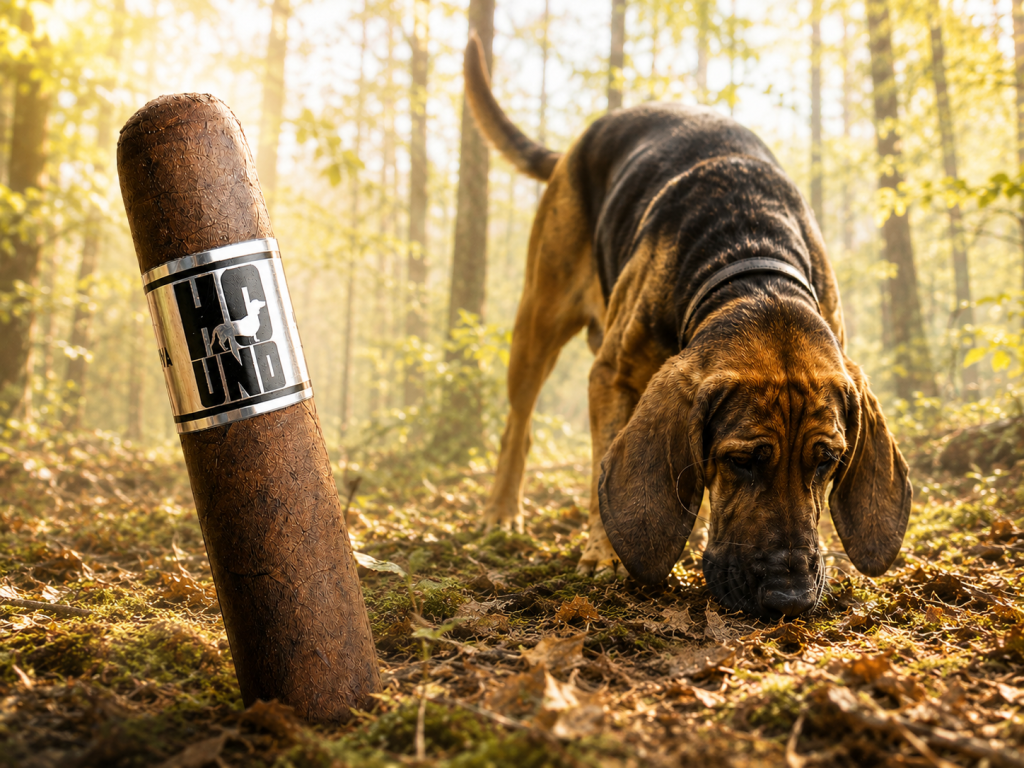
Hound is the perfect name for this stick.
When I first saw it, I wondered why Dex would call the cigar that. Now I get it. It’s like a bloodhound, doggedly, excuse the pun, following a scent.
That’s what stayed with me when I finished the cigar. The Hound doesn’t collapse. It doesn’t just thicken, darken, and coast into the finish. It keeps working. It keeps moving.
It doesn’t stop.
Disclaimer: I received my review sticks as samples from Hound. When I first reached out to Dex, I was fully intending to purchase a box, but Hound is still working through import and export logistics. He sent samples in the meantime. Receiving the cigars as samples did not affect my review or rating.





Leave a comment