
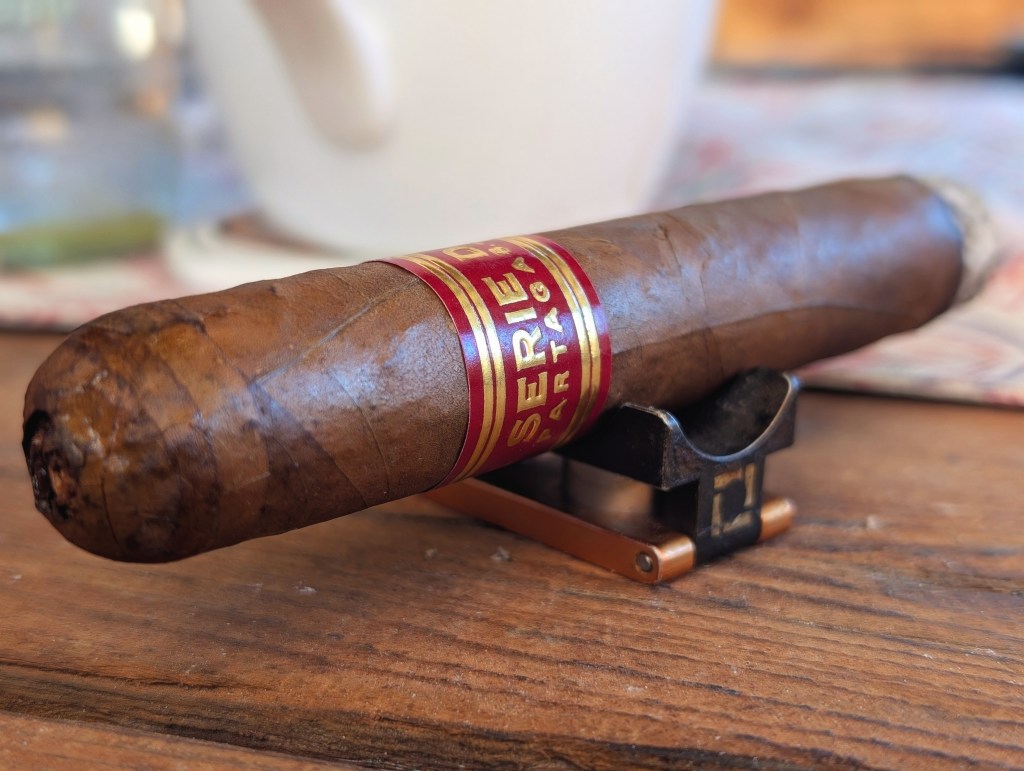
Wrapper: Cuba: Vuelta Abajo / Pinar del Río likely, but not specifically disclosed by Habanos for this vitola
Binder: Cuba: Vuelta Abajo / Pinar del Río
Filler: Cuba: Vuelta Abajo / Pinar del Río
Size: Robusto (4 7/8 x 50)
Strength: Medium-Plus → Full (nub)
Body: Medium-Plus → Full (nub)
Price: $43–$58 USD per cigar, overseas/gray-market Cuban retail; U.S. legal retail unavailable
Factory: Habanos S.A., Cuba
Blender: Not publicly disclosed
Release: Regular Production
Smoking Time: 1:25–1:35
Experience Rating: 100
Energy.
The final frontier.
This is the voyage of the Cuban Partagás Serie D No. 4. Its mission: to move with grace, to baffle with complexity, and to boldly express what Cuban tobacco can be.
Okay, that’s enough.
I’m giddy right now.
A 100-pointer always leaves me in a euphoric state. Smoking greatness has a way of doing that.
This cigar was filled with energy from the start, and it never let up, even at the nub. To be honest, I was going to score it 99 because of its limited availability, but that wouldn’t have been fair. Availability has nothing to do with greatness.
And greatness should always be rewarded.
Synopsis
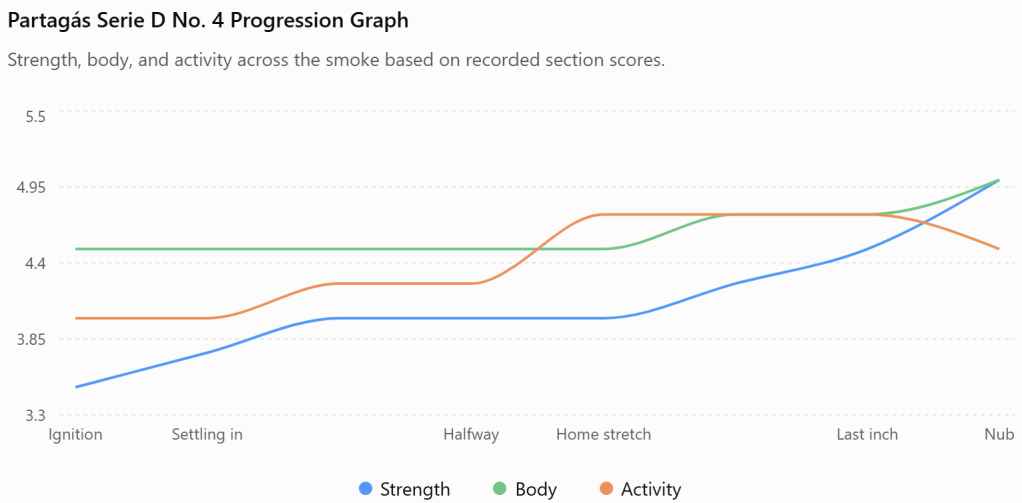
Strength begins just above medium-plus and rises slowly enough to feel almost hidden, only reaching full in the nub. Body is close to full from ignition and remains there for most of the smoke before reaching full in the nub. Activity starts alarmingly high, builds steadily through the middle, peaks in the home stretch and last couple of inches, then eases only slightly in the nub while the cigar remains articulate and highly energetic.
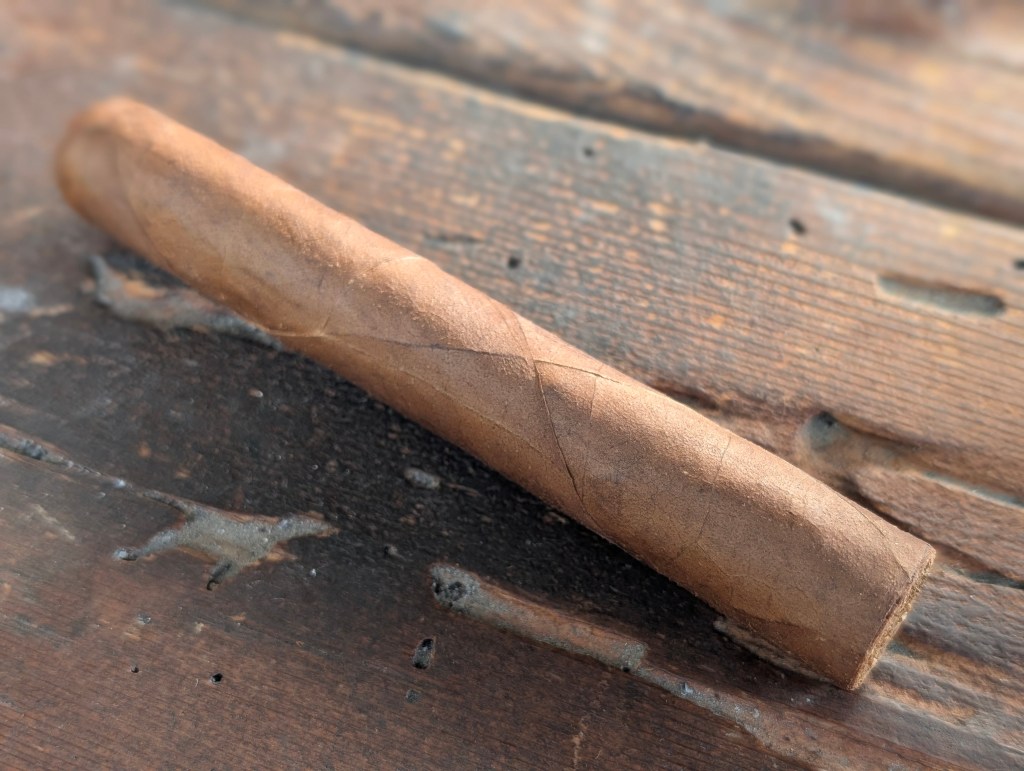
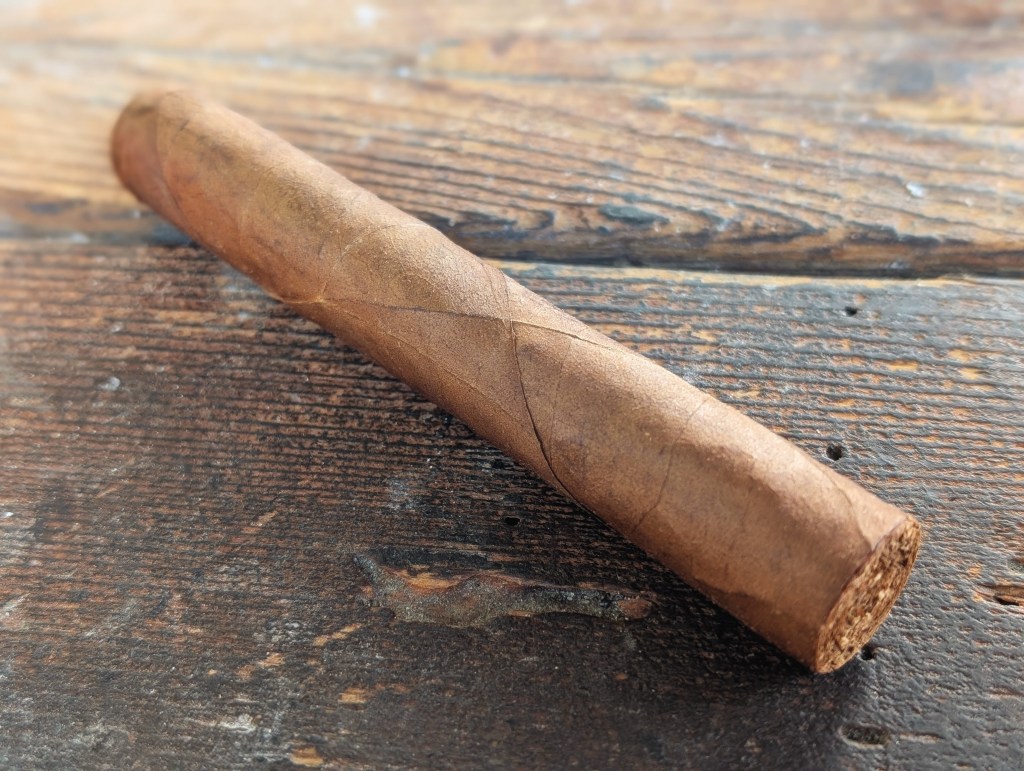
The Partagás Serie D No. 4 doesn’t make a big visual statement.
The wrapper has an oily sheen, very few veins, and smooth skin. It’s a simple, quiet-looking cigar with a kind of understated elegance, like it has nothing to prove.
The wrapper gives hay, floral sweetness, and no real barnyard. The foot is richer, with fruity sweetness, caramel, vanilla, and rich tobacco. Nothing jumps out as unusual at this stage, but everything is clean and inviting.
The first puff brings a surprising hit of sweetness and lift. It comes forward right away, then moves into the background and stays on the finish.
Charred cedar leads, with vanilla crème, milk chocolate, nougat, malt, buttered toast, orange marmalade, and light coffee moving in quickly behind it. The body is already close to full, but the cigar doesn’t feel heavy.
The complexity is immediate.
What stands out is how active the cigar is from the start. It doesn’t need time to settle before showing movement. The flavors are clear, but they aren’t locked into place. Strength begins just above medium-plus, body is close to full, and activity is already high.
The energy is both startling and captivating.
As the cigar settles in, charred cedar remains out front. There’s an aroma akin to a cedar smudge coming from the foot, and it reminds me of a Native American purification ceremony.
The flavors keep cycling. Nothing feels fixed yet. There’s no obvious core and no clearly defined structure, but the cigar doesn’t feel chaotic. That’s the surprise. It’s fluid and highly energetic, but still composed.
Vanilla crème remains one of the most beautiful parts of the profile, and then cream enters more clearly. That gives the cigar its first hint of structure as the strength nudges upward, while the body stays close to full and the cigar keeps moving.
The draw is perfect, with just enough resistance to make me work for it.
Charred cedar still leads, but cream has become one of the anchors. That catches my attention because I’m so used to coffee sitting at the base of Nicaraguan cigars. Here, cedar and cream are doing that work instead, and the cigar feels different because of it.
The body remains close to full as the flavors keep cycling. Honey crunch candy comes through, followed by malted milk balls, white chocolate, and sourdough bread. Salt adds a nice foil to the sweetness, keeping the profile from becoming too soft or too pretty.
Then the spice finally arrives.
It doesn’t take over, but it lifts the profile as the strength continues to build. The movement becomes a little more active here, and the cigar keeps its composure while adding another layer of motion.
At the halfway point, the flavors are still cycling, but the cigar begins to feel more structural.
The spice asserts itself, and minerality joins the core, carrying into the finish with the background sweetness still in place. That gives the profile more lift without changing the cigar’s overall composure.
Then darker elements arrive. Loamy earth moves in, coffee steps forward, and the core becomes more prominent. The body is still close to full, but now it has more definition. The smoke feels less suspended than it did earlier and more built around a center.
And then, out of nowhere, I get Frosted Flakes with milk. Amazing.
The sweetness doesn’t flatten the cigar. It plays against the mineral edge, the growing earth, and the coffee underneath. Kahlua candy follows, and the whole thing starts to feel a little like smoking an espresso martini.
Strength holds steady here rather than pushing ahead, while the cigar’s activity remains high. It’s still moving, still cycling, but now the movement has a darker and more deliberate frame around it.
The espresso martini impression keeps going into the home stretch, but the cigar starts throwing new things into the mix.
Herbal notes enter first: sage, rosemary, oregano, and eucalyptus. Then baking spices arrive with cinnamon, nutmeg, clove, and cardamom. The profile is still deeply active, but not scattered. The flavors flash in and out, sometimes randomly, yet the cigar keeps them close enough to feel controlled.
Then Hawaiian bread shows up. Damn.
The body starts to push richer as the core compresses slightly, but the strength doesn’t really move. That’s part of what makes this so strange. The cigar gets denser and more active without becoming stronger. It’s throwing all sorts of things at me, but it still feels composed.
The burn has been perfect the entire time, and the cigar remains steady into the last couple of inches.
The cycling slows slightly, but the espresso martini impression persists. The core is dark and steady now, with milk chocolate moving toward dark chocolate. The herbal notes and baking spices intensify, especially the cinnamon, which adds to the spice already building in the profile.
Then the sweetness comes back in a different form: yeasty glazed donut, followed by more malted milk balls.
This is a total flavor bomb, but the cigar doesn’t lose its balance. The core is really dark, and the body pushes closer to full, but the spice and sweet notes keep it from getting heavy or blunt. As the spice intensifies, the strength finally starts climbing again.
In the last inch, sweet bread steps forward and shows up in every puff.
The body gets richer, but it doesn’t feel like compression this time. The cigar is still moving, and the spice keeps pulsing enough to maintain its energy. Sweetness intensifies on the finish, balancing the core as it continues to darken.
The flavors keep cycling, but they don’t feel contained in a rigid way. They stay close to home. Nothing breaks free, and nothing turns sharp. That’s part of what keeps the cigar so compelling this late in the smoke.
The strength is higher now, but the cigar still doesn’t feel rough. It feels alive, controlled, and unusually clear for something this active.
At the nub, strength and body finally move fully into full territory.
That’s when the deception becomes obvious. The climb has been so gradual that I didn’t feel the full weight of it while it was happening. The cigar has been building underneath itself the entire time.
The dark core, pulsing spice, and persistent sweetness on the finish create incredible energy with almost no fall-off. Even now, the flavors remain present and articulate. Coffee turns to ristretto, the earth is dark, and the mineral bite keeps offsetting the darker turn.
The spice moves to my lips, and it’s beautiful.
This is full now, but it still isn’t heavy-handed. The cigar reaches the end with strength, body, movement, and clarity intact.
This was one of the most complex Cubans I’ve smoked.
I smoked two of these, and while the flavors weren’t exactly the same, the behavior was. Both cigars were articulate, smooth, composed, and energetic all the way to the end. The herbal and baking spice movement in the home stretch showed up both times, and that tells me this wasn’t just one lucky stick firing off something strange.
What makes the Serie D No. 4 so remarkable is the way it balances structure and freedom. Cedar, coffee, earth, minerality, and cream eventually form the core, but the rest of the profile is allowed to roam. Flavors appear, disappear, return, and flash in new combinations, but they never scatter. They float around like microorganisms in a liquid medium: unpredictable, active, and fully alive.
The strength is deceptive, too. It creeps upward the entire way, eventually reaching full at the nub, but the sweetness, spice, and mineral lift keep masking the climb. You have to look at the progression to see how strong the cigar became, because it never feels punishing.
And to be clear, I didn’t score this 100 because it’s Cuban, or to fuel the Cuban vs. non-Cuban debate. Good is good no matter what it costs, and in this case, good is good no matter where it was made. The cigar earned the score by what it did.
This cigar blew me away.
Both times.




Leave a comment