
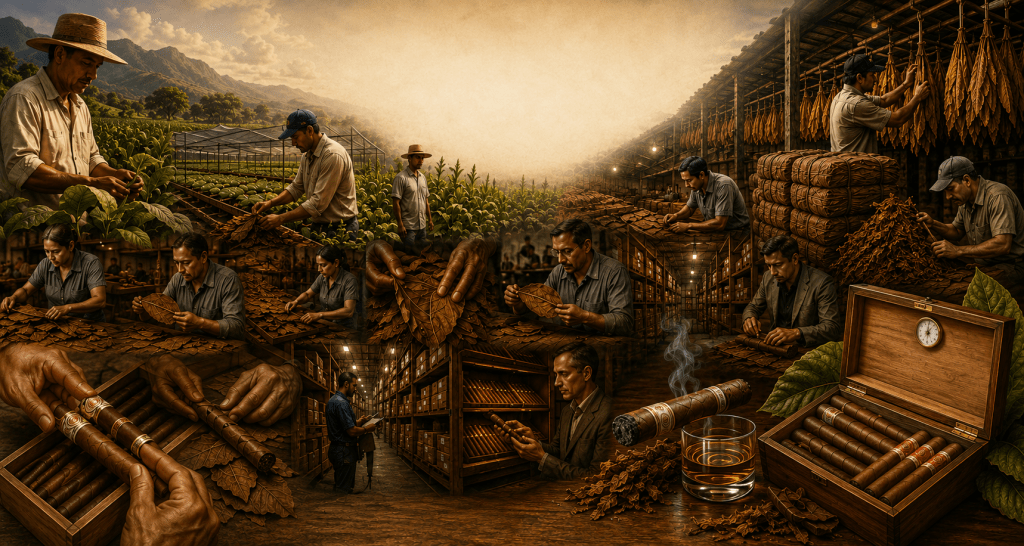
I’ve alluded to this several times: what we smoke is the product of a complex process that passes through many hands before it becomes a finished product.
A premium cigar doesn’t begin at the rolling table. It begins long before that — in seedbeds, fields, curing barns, fermentation rooms, aging cellars, sorting rooms, factories, warehouses, humidors, and finally, in the hands of the smoker.
We often reduce cigars to brands, bands, factories, or blenders. But every cigar represents a chain of labor, knowledge, instinct, and decision-making stretching across years. Before a cigar ever reaches our humidor, it has been handled by countless people.
Of course, none of this matters for enjoying a cigar. You don’t need to know what a despalillador does. You don’t need to understand fermentation temperatures, wrapper grading, or primings. You can simply cut, light, and enjoy.
But I still think it’s fascinating.
Every cigar is the product of agriculture, craftsmanship, logistics, preservation, and retail, all working toward a single moment.
And eventually, someone handed it to you.
The cigar may feel simple when we smoke it. But behind that simplicity is an enormous amount of labor and accumulated knowledge. That’s part of what makes premium cigars unique. They’re still profoundly human products in an increasingly automated world.
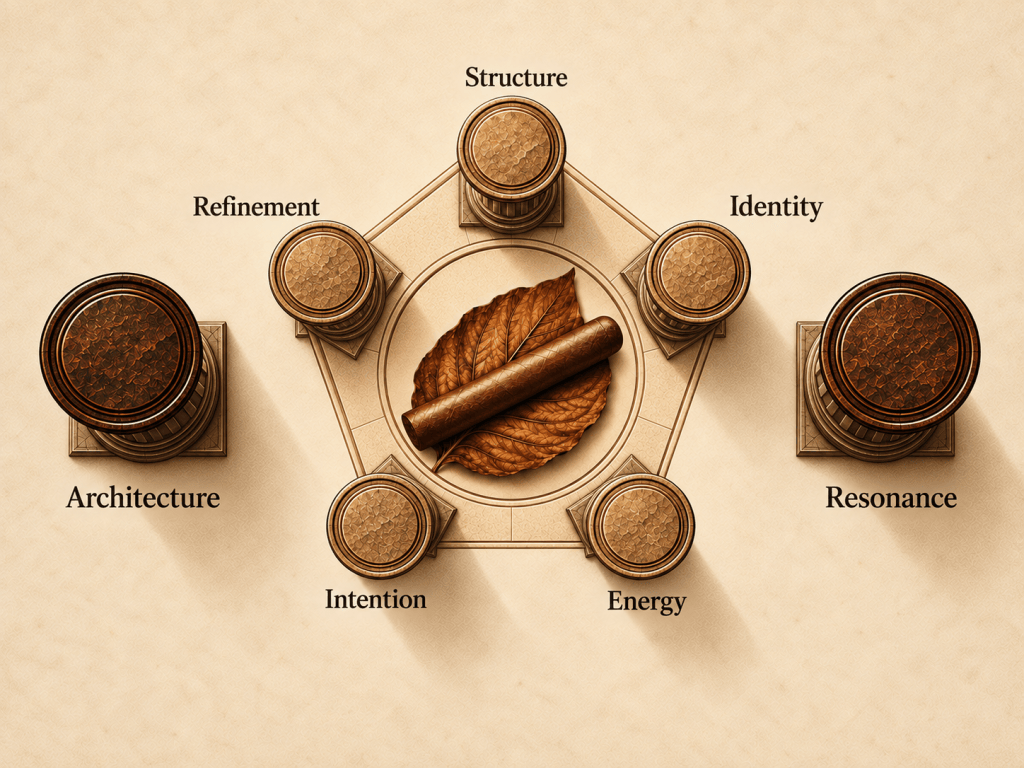
A note on format: I usually use tables for foundational pieces, but in this case I found an infographic better communicates the scope of the journey.
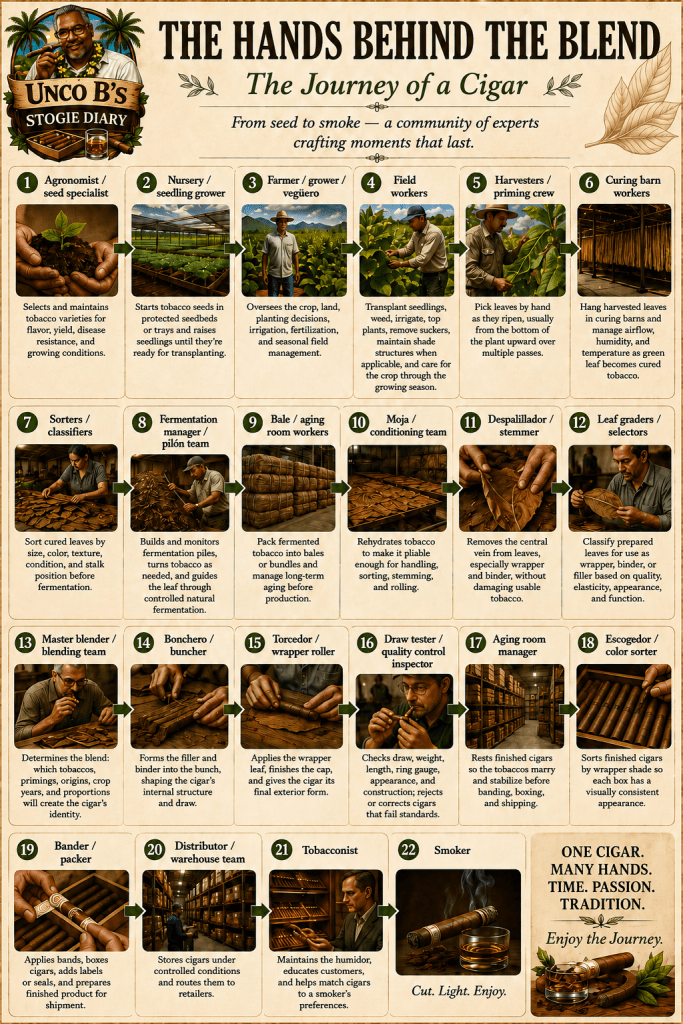
The next time you cut and light a cigar, remember the chain of people, labor, and accumulated knowledge that made the moment possible.




Leave a comment