
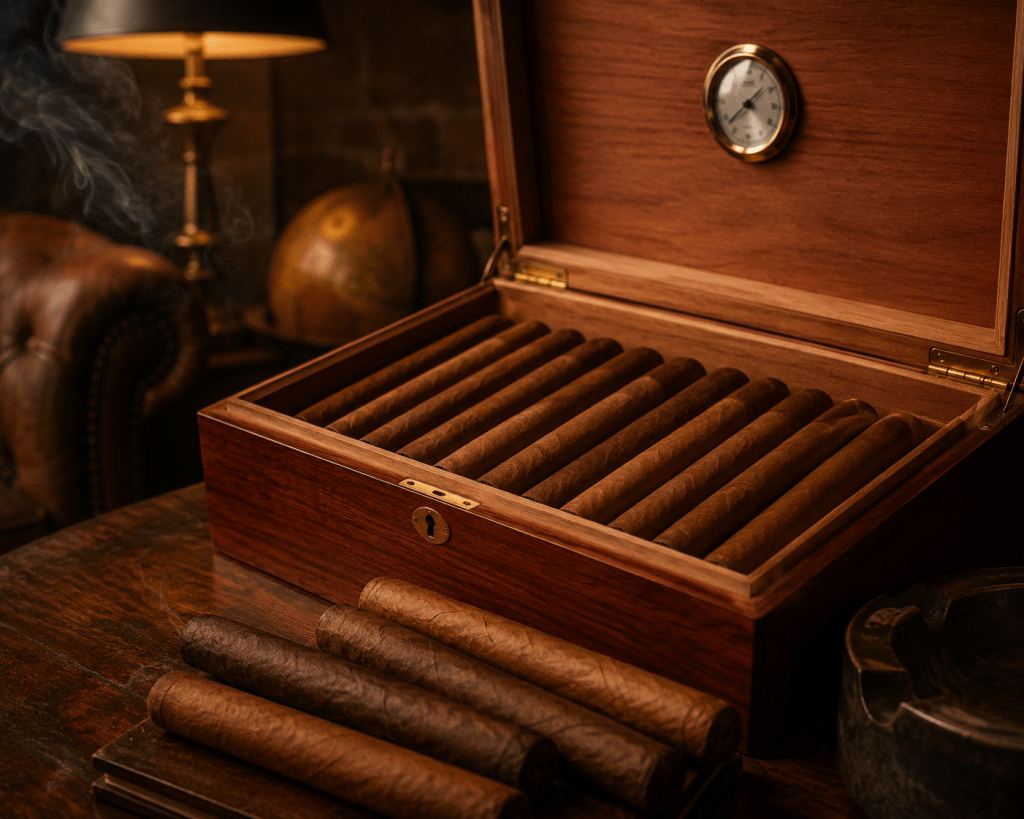
Katman often talks about giving cigars “naked humidor time” before reviewing them. His cigars usually get at least two or three months to settle into his environment before he lights them up.
I don’t have that kind of patience.
My rule of thumb is simpler: I try to let cigars sit in my humidor for at least one month before I review them. Do I make exceptions? Constantly. Sometimes curiosity wins. Sometimes I want to know what a cigar is right now.
But when I’m being disciplined, one month is my baseline. It gives the cigar time to acclimate, settle, and begin behaving like itself in my environment.
But enough about my ritual. Let’s talk about aging.
One thing I’ve noticed is how careful people are with the word aging. If a cigar has only been sitting for a few weeks or a couple of months, people often avoid saying it has aged. They say it has been rested. They say they laid it down. They say it has had humidor time. Aging, apparently, requires some undefined length of time before the cognoscenti of the cigar world allow the word to be used.
I understand the distinction people are trying to make. A cigar with thirty days in a humidor is not the same thing as a cigar with five years on it. But that doesn’t mean the first cigar isn’t aging. Aging isn’t a title awarded after enough time has passed. Aging is the process itself. The moment a cigar is rolled, time begins acting on it.
As it ages, a cigar continues to settle. Moisture equalizes. Leftover impurities are released. The tobaccos begin to marry. Sharp edges can soften, and the cigar may become smoother, rounder, and more integrated.
To be clear, aging doesn’t guarantee improvement. Time can refine a cigar, but it can also flatten it. That is why a cigar aged for a month can taste different from one aged six months, and different again from one aged over a year.
Let me put it plainly: cigars are constantly aging right up to the moment they’re lit. This isn’t just smoker language. The industry already recognizes aging as part of the cigar’s life.
Cigar manufacturers even have a term for it: añejamiento, which is Spanish for aging. It occurs twice in the production process.
The first is tobacco añejamiento, which happens after the final fermentation. The leaves are sorted, placed in tightly wrapped sackcloth bundles, and stored in a warehouse, where they continue releasing impurities and curing until they are ready for use.
The second is cigar añejamiento. Finished cigars are tied into bundles of fifty, placed in cedar cabinets, and moved into a marrying room. There, the cigars continue releasing impurities such as ammonia. More importantly, the aromas and flavors of the individual leaves begin to blend. They remain there until the cigar maker decides they are ready for release.
But añejamiento doesn’t stop when the cigars are boxed. It continues until a cigar is lit. In that sense, we are all stewards of añejamiento.
Once a cigar enters our humidors, we become part of its aging process. We decide where and how long it rests, and the conditions it lives in before we smoke it. We may not have blended it, rolled it, or boxed it, but we are still responsible for the final stretch of its life.
That doesn’t mean we need to be obsessive about it. A cigar isn’t a museum piece. It doesn’t need to sit untouched for years before it becomes worthy of attention. Sometimes a month is enough. Sometimes a few months make a difference. Sometimes a cigar tells you everything it has to say right away.
But every cigar in the humidor is still changing. Slowly, quietly, and whether we call it resting, laying down, acclimating, or aging, time is still doing what time does.





Leave a comment