***The first version of this was way too angry and sarcastic, and I realized that I made it about me, even though I wanted to focus on the people. So, I completely rewrote it.***
When behavior at the top bends the system, it touches places and people who had nothing to do with the decisions or behavior that set everything in motion.
You can see the pattern across history: in 1929, speculative excess helped set off the Great Depression. In the 1970s, the oil crisis sent shockwaves through economies around the world. In 2000, the dot‑com bubble burst, wiping out trillions in value and resetting the tech sector. And in 2008, subprime lending didn’t just strain the housing market — it rippled outward and reshaped the global economy.
The scale changes, but the mechanism doesn’t. When decisions at the top destabilize the system, the impact doesn’t stop there — it cascades into the lives of people who had no part in creating the problem.
If you’re not familiar with the sanctions placed on Allied Cigar Corporation — and how those sanctions unintentionally swept Altadis and the people and companies connected to it into the crossfire — halfwheel released an excellent breakdown of the debacle back in December.
Here’s the short version: Because of the sanctions, Altadis suddenly lost access to the factories that make most of its cigars. Its entire manufacturing backbone — Tabacalera de García, Flor de Copán, the whole engine — went quiet almost overnight.
But the real story isn’t about Altadis. It’s the impact radiating outward — the factories, the factory workers, the towns, the entire ecosystem now carrying the weight of a situation they didn’t create. And this piece is meant to hold the focus there, on the people and communities who are feeling the consequences.
The Factory Workers: The First to Feel the Break
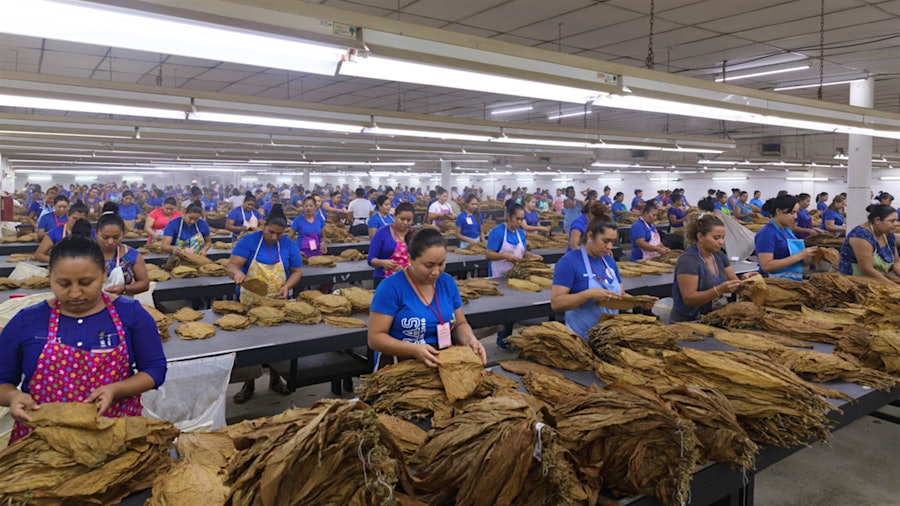
When a factory goes dark, it isn’t just the rollers who lose their footing — it’s the entire organism. A cigar factory is a layered craft system: the leaf sorters and fermentation crews who manage the biological engine; the despalillo teams who strip stems with surgical precision; the supervisors and quality‑control techs who keep blends consistent; the banders, box makers, and packagers who give the cigar its final identity; the warehouse crews, maintenance teams, and logistics staff who keep the whole machine moving. Every one of these disciplines depends on the daily pulse of production. When that pulse stops, the work that sustains thousands of families evaporates at once.
And with Altadis shifting production to AJ Fernández and Plasencia to keep cigars in the market, the people who built Tabacalera de García and Flor de Copán are left without the work that defined their routines and supported their towns. The production moved; their jobs did not. The craft stayed the same, but the hands that carried it forward were sidelined by circumstances far outside their control.
The Local Economies: Where the Impact Becomes Real
When a factory collapses, the damage doesn’t stay inside the walls. A place like Tabacalera de García or Flor de Copán isn’t just an employer — it’s the economic spine of its town, a circulatory system that keeps hundreds of small livelihoods moving. The cafeterias that feed workers on their breaks, the bodegas that rely on their daily purchases, the transportation crews who shuttle leaf and finished product, the farmers and leaf suppliers upstream, the printers and carpenters downstream, the sharpeners, the repairmen, the vendors — all of them depend on the steady heartbeat of production.
When that heartbeat stops, the entire ecosystem buckles. The tragedy isn’t just that the artisans are sent home; it’s that an entire community built around a century‑old craft is pushed into uncertainty because of bad behavior far from the factory floor, leaving families, routines, and local economies suspended in a kind of forced stillness.
Final Puff
Cigars have survived revolutions, embargoes, hurricanes, and every boom‑and‑bust cycle this industry has ever thrown at them. What they struggle to survive is the moment when the people who make them become collateral damage in someone else’s wrongdoing — when a craft built on hands and heritage gets dragged into the blast radius of decisions made far outside the factory walls.
The workers inside these factories didn’t lose their footing because of tobacco or blending or branding. Their lives were upended because the majority owner of Allied Cigar Corporation was arrested for illegal activity, triggering sanctions that froze the very factories where they earned their living. Overnight, Altadis lost access to the places that made most of its cigars, and production was pushed to AJ Fernández and Plasencia just to keep the brands alive. But the people who kept Tabacalera de García and Flor de Copán running — the sorters, fermenters, strippers, rollers, packagers, supervisors, mechanics, warehouse crews — were left in limbo.
Is There a Ray of Hope?
Surprisingly, yes, but it isn’t romantic, and it isn’t guaranteed. The only way out is structural: surgically remove the contaminated ownership from the system. Until the offshore chain that links Allied Cigar Group back to its sanctioned majority owner is severed, the factories stay frozen, and Altadis stays locked out of its own supply chain.
Tabacalera SLU — the operational heart of the entire Allied ecosystem — has already stepped onto the operating table. They’re working with the British Virgin Islands Supreme Court to unwind the holding companies and force the sale of the controlling stake. If that liquidation goes through, the sanctions evaporate, the U.S. and U.K. markets reopen, and Altadis regains access to Tabacalera de García and Flor de Copán. The factories restart. The rollers return. The blends stabilize. The brands breathe again.
It’s not a miracle. It’s a scalpel. And right now, it’s the only scenario where this century‑old cigar empire survives the damage done.
The scalpel is moving, but slowly. Courts don’t operate on factory time, and while the holding companies are being unwound in the British Virgin Islands, the people who kept this century‑old engine running are waiting with no guarantees. Even if the ownership is unwound and the sanctions eventually lift, the uncertainty doesn’t disappear; legal machinery grinds forward at its own pace, corporate structures untangle even more slowly, and the workers who built these factories into institutions are left wondering whether the work that shaped their lives will still be there when the doors finally reopen.
Why I Wrote This
I didn’t write this to complain or to romanticize factory life. I wrote it because what happened with Allied didn’t just disrupt a supply chain — it disrupted lives. Real lives. People with families, routines, skills, and pride in the work they do.
A friend of mine who owns a shop summed up the problem without even realizing it. He told me he wasn’t worried about Altadis; they’d be fine. A short delay in orders wasn’t going to shake him. And he’s right—Altadis will survive this. The brands will survive this. The cigars will survive this.
But when I asked him, What about the people downstream? he just shrugged.
That shrug didn’t make me angry. It broke my heart. Because that shrug is the whole problem. It’s the distance between the industry and the hands that keep it alive. It’s how an arrest in another country can send shockwaves through factories full of people who did nothing wrong. It’s how entire towns can be pushed into uncertainty while the rest of the world waits for the paperwork to clear.
I wrote this so the shrug isn’t the last word.
Discover more from Unco B's Stogie Diary
Subscribe to get the latest posts sent to your email.
