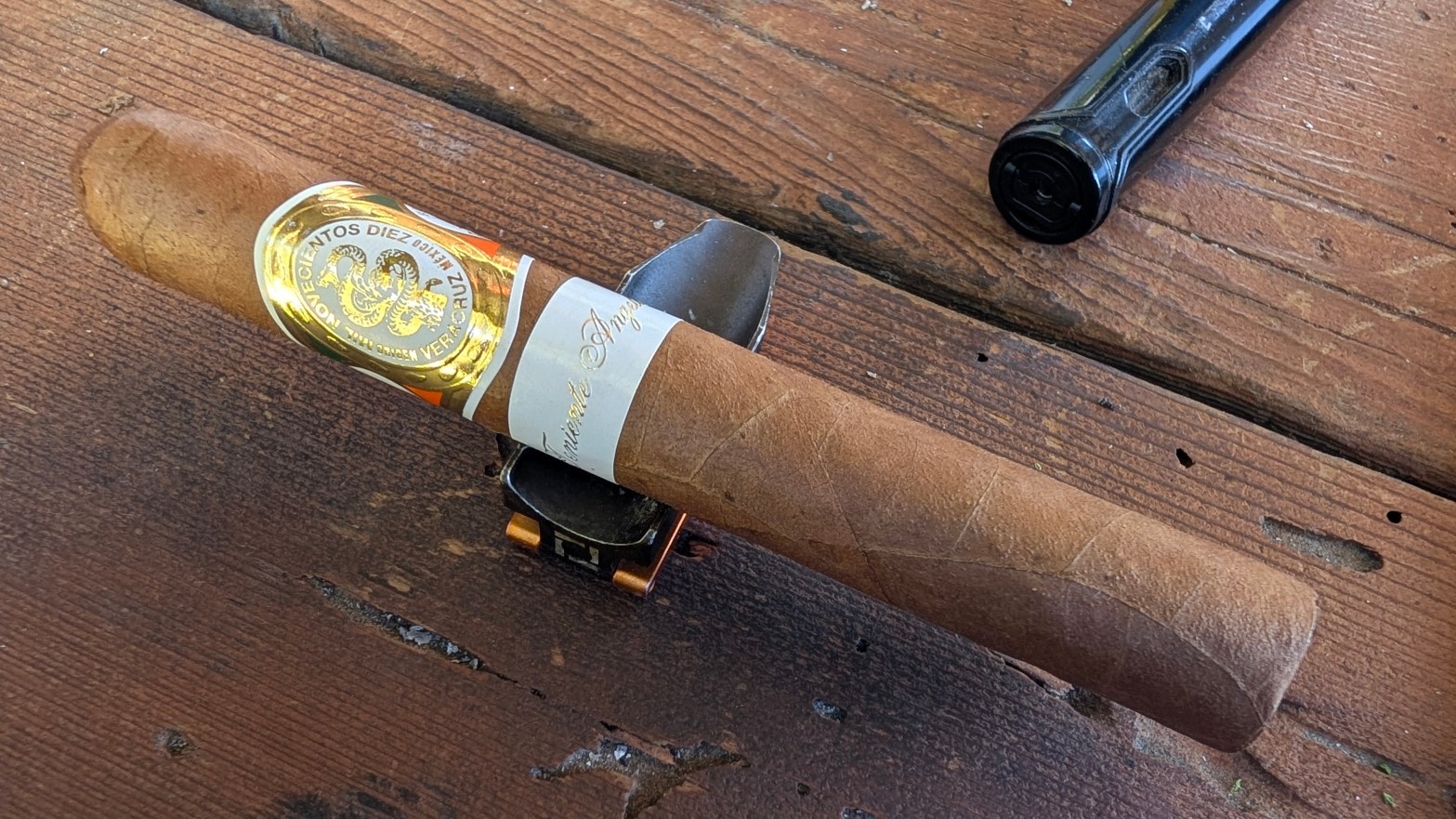
Purchased: 2 Boxes of 10 Toro (6 X 52)
Store: CigarPage.com
Price: $65/box (they’re still that price!). This is normally a $17 cigar
Buy Again: Yes
Box Worthy: The only way I’ll buy them
Experience Rating: 99
One of the reasons I’ve followed Katman for so long is that he moves through the cigar world on his own terms. While most reviewers chase popular trends and release cycles, he gravitates toward the overlooked and off-center, cigars that rarely get the spotlight. And because of that, I’ve found brands I never would have reached for on my own — Paul Stulac, Curivari, Powstanie, and, of course, Casdagli. Now I can add Casa 1910 to that list.
When I saw his review of this cigar, I felt as if I had seen the name before. A quick search through my older posts confirmed why: I’d smoked the Cuchillo Parada. I didn’t enjoy it. I even admitted at the time that I’d probably smoked it too early. The first half was incredibly harsh, and I almost chucked it. And though the second half improved dramatically, the overall experience never settled into anything memorable. It slipped out of my mind as quickly as it arrived.
And this brings me to the Soldadera Edition Teniente Angela. It’s a mouthful, so I’ll just call it “Angela” going forward. I’m snickering as I write this because I seem to be on a streak lately with cigars marking a turning point in a brand’s evolution: La Aurora Family Creed Fuerte Sol, AJ Fernandez Decenio, LCA Purple People Eater. I’d love to say I chose those cigars with intention, or that some divine guiding hand nudged me toward them, but the truth is much simpler: it was pure dumb luck.
Like AJ dipping his toes in the waters of “doing something different” with the Purple People Eater, then taking the plunge with the Decenio, Angela is Casa 1910’s own plunge into a broader blending philosophy — a shift from Mexican puros to a more global, boutique identity.
It wasn’t an abrupt transformation. The Cuchillo Parada from the Revolutionary Edition line was 100% Mexican puro; the Cavalry Edition widened the frame by using a multi-country blend of Mexican, Nicaraguan, and Ecuadorian tobacco. But Angela is where the evolution is unmistakable, with Casa 1910 going full-on cosmo; still rooted in Mexico, but now drawing from a wider world of tobacco and technique. The leaf stats make the shift plain:
- Wrapper: Ecuadorian Habano
- Binder: Mexican, Dominican Republic
- Filler: Dominican Republic, Nicaragua
What this resolves into is a cigar with the power and strength of a professional athlete, and the balance and finesse of a ballet dancer. It’s a blend that carries muscle without losing grace, and grace without losing its footing. It’s Casa 1910 growing up: grounded in its roots but fully at ease moving beyond them.
When a cigar moves me, I like to come up with a word or phrase that sums it up. For the La Aurora Family Creed Fuerte Sol, it was “transformative.” For the AJ New World Decenio, it was “revelation.” For the Angela (yes, it moved me), the word that came to mind immediately was “Baryshnikov.”
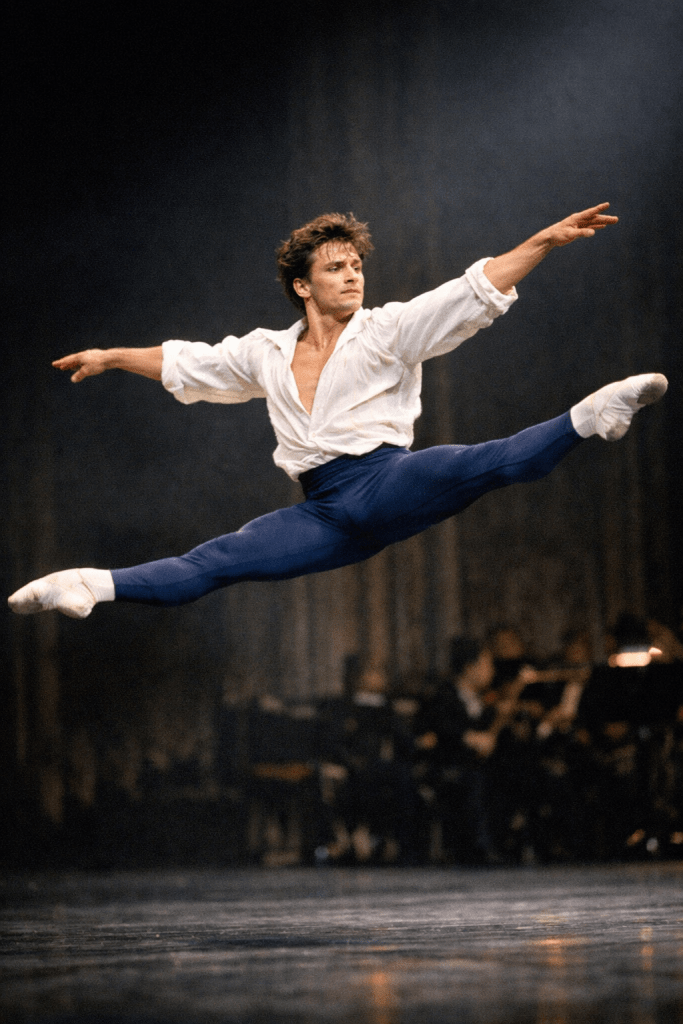
I rarely talk about my past beyond childhood, but in college and into my mid‑20s, I wanted to be a ballet dancer. When I was a freshman in college, my next-door neighbor dared me to take a ballet class after seeing me studying on my dorm room floor in a split (I studied martial arts). I don’t turn down dares, so I signed up—and fell hard for ballet. Baryshnikov became my idol. He was pure power wrapped in impossible grace, a body that could explode and then float, as if gravity were optional. Watching him filled me with a visceral awe I can still feel if I close my eyes.
That’s the effect the Angela had on me.
Removing the wrapper, my first reaction was simple and involuntary: Wow! The cigar was gorgeous — a smooth, even skin with no raised veins and barely a seam in sight. The gold‑on‑white of the primary and secondary bands, paired with that elegant script on the secondary band, signaled a high level of sophistication and elegance.
Of course, looks can deceive. I’ve been fooled before by lipstick on a pig. But the moment I smelled the wrapper and foot, my doubts were assuaged. What hit me was so unexpected it stopped me cold: dried apricots. Not a vague fruitiness — the full, sweet‑golden punch of sticking your nose into a bag of them, the sour twang resolving into apricot preserve. I was so startled, I put the cigar back in my dry box for thirty minutes just to make sure I wasn’t imagining it.
Coming back to it only confirmed what I had smelled. The dried apricot note dominated so completely that, if there were other aromas, they barely registered. Maybe a touch of barnyard underneath, but the fruit was the star — bright, unmistakable, and unlike anything I’ve encountered in a long time.
I punched the cap, took a cold draw, and smiled at the deliciousness. But instead of an apricot flavor, the fruit was a ripe plum. Walnut, sage, and a hint of clove sealed the deal — I was in for a treat!
Most cigars take their time revealing their true nature, circling the point with hints and innuendo before finally showing their goods. But the Angela doesn’t waste time or energy on a protracted introduction. It gives you a couple of puffs of cedar and black pepper at light-up, then gets right to the point and establishes its core structure: oak, cedar, light black pepper, roasted nuts, a light, fruity sweetness, and baking spices laid on a bed of caffe latte with a light sprinkle of cocoa powder on top. It’s Baryshnikov flying onto the stage in a single, explosive leap — no warm‑up sequence, no careful footwork, just immediate power in motion.
From there, it’s as if Manolo Santiago (blender) takes a page from the AJ Fernandez playbook and spends the middle stanza slowly building strength and tightening its core. The initial sprinkle of cocoa folds in, coffee grows more stark, the cream pulls back, the fruity sweetness drifts to the background, and oak establishes itself as the central pillar. And while all of that is happening, notes of honey, fresh flowers, cashew, yeasty bread, milk chocolate, caramel, and vanilla wink in and out to keep me on my toes — very much an AJ move.
And since we’re on AJ, it’s worth noting that he now has two distinct patterns: the early‑career signature start → plateau → power buildup, and Decenio’s signature start → integration → refinement. Angela borrows from both, which is what makes it so compelling: declaration → integration and power buildup → refinement. It’s a hybrid motion: confident, modern, and unmistakably intentional.
And though integration may sound like a dry, static word, Angela is anything but. It’s Baryshnikov in Le Jeune Homme et la Mort, modern ballet at its most expressive, freed from classical constraints, letting him show what grace in motion looks like when tradition isn’t a cage but a springboard. That’s Angela: strength and emotion, precision and abandon, all moving through the air with purpose.
As the cigar moves into the finish, Angela builds in strength and intensity, the core intact and edging towards full, yet it never loses its composure. Cayenne pepper and hazelnut add aromatic lift, preventing the cigar from sinking into heaviness. It’s Baryshnikov delivering one final, powerful leap: a closing burst of strength that’s precise, controlled, and undeniably alive.
Total smoke time: 2 hours
 Unco B's Stogie Diary